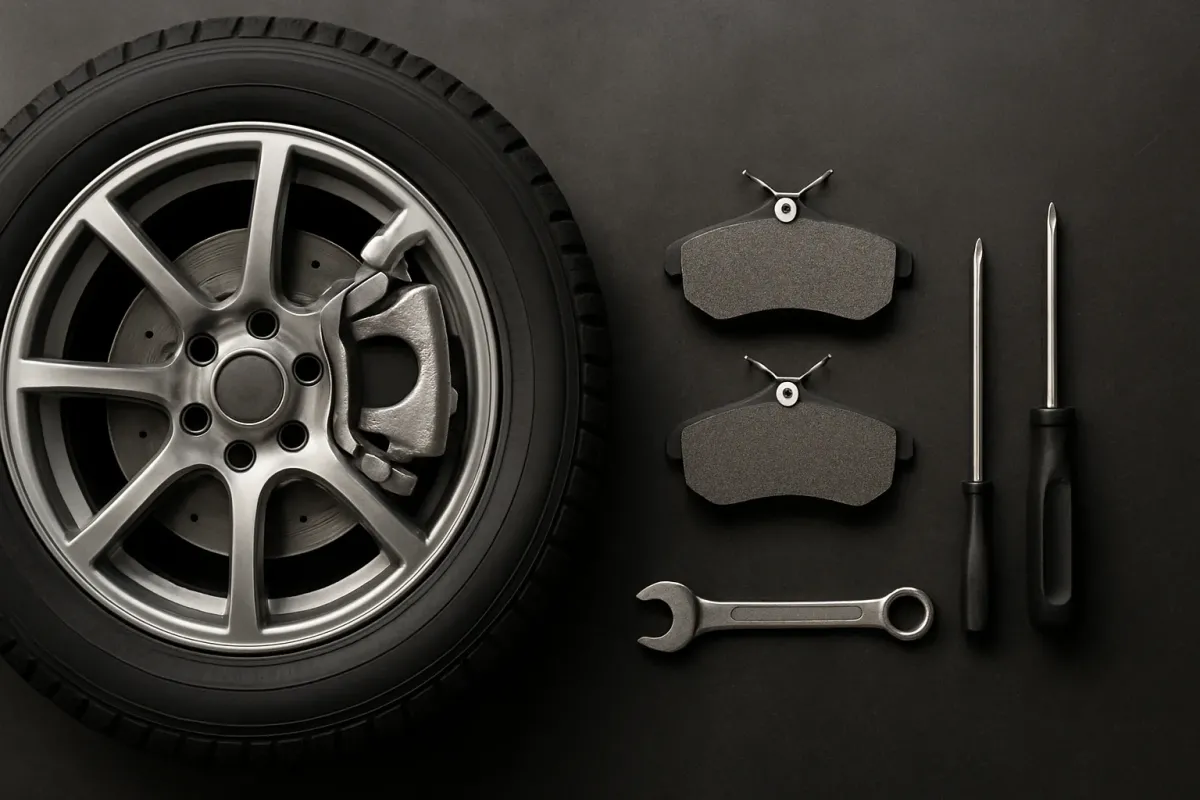
Suspension & Steering for Dodge Ram 1500: Selection and Installation
How to assess suspension and steering on the Dodge Ram 1500, choose the right parts and safely prepare and carry out the installation.
Basics: Suspension and Steering on the Dodge Ram 1500
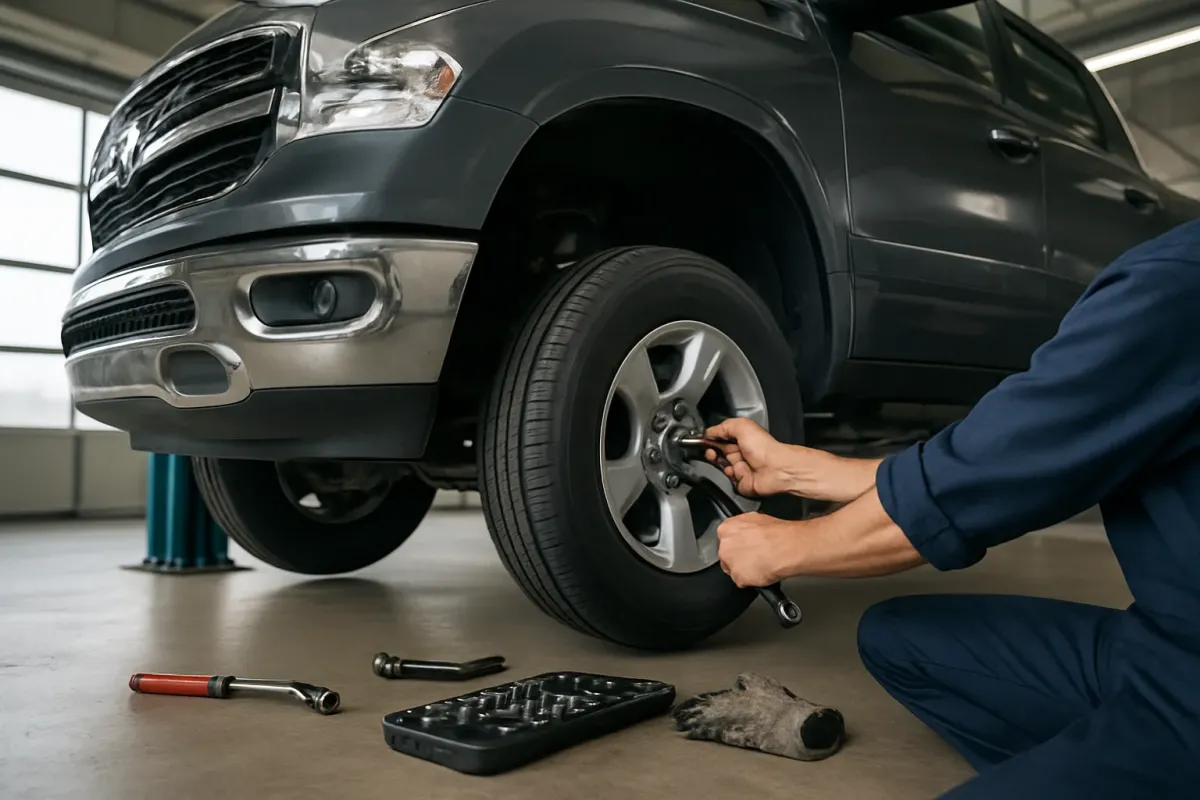
The Dodge Ram 1500 is designed as a pickup for high payload and towing capacity. Suspension and steering work closely together: the suspension supports the vehicle and its load, compensates for irregularities and largely determines ride comfort and ride height. The steering transmits your steering wheel input precisely to the front wheels and, together with the suspension components, ensures directional stability.
Depending on model year, drivetrain (2WD/4WD) and equipment, the exact design of control arms, struts, leaf springs and steering components varies. Therefore always check the registration document or VIN before ordering parts and use the vehicle search in the shop, for example in the category Federung & Lenkung.
Key Components of the Front Axle
The front axle of the Dodge Ram 1500 is where most steering and braking forces converge. Wear is particularly noticeable here through steering play, rattling noises or uneven tire wear.
Control Arms and Ball Joints
Control arms guide the wheel in defined paths and are connected to the frame via rubber bushings. At the ends there are ball joints that allow steering and suspension movement. Worn bushings or joints lead to imprecise steering behavior and noises when passing over bumps or when steering while stationary.
On the Ram 1500, depending on the model year, there is typically an upper and lower control arm per side. For newer models with independent front suspension you will find, for example, front upper and lower control arms in the shop such as a front upper left control arm or front lower right control arm for the Ram 1500 DT (5th generation). Pay close attention to model generation, drivetrain and installation side when selecting parts.
Tie Rods and Tie Rod Ends
The tie rod connects the steering gearbox to the front wheels. At the ends are tie rod ends (ball joints) that move when steering. Play in the tie rod or tie rod ends manifests as vague steering feel, clacking and difficulty setting the alignment precisely.
In the shop you can find suitable tie rods and tie rod ends in the category Spurstangen & -köpfe. Because there are significant differences between model years and steering variants, identification via the registration document and the internal vehicle selector is mandatory.
Wheel Bearings and Wheel Hubs
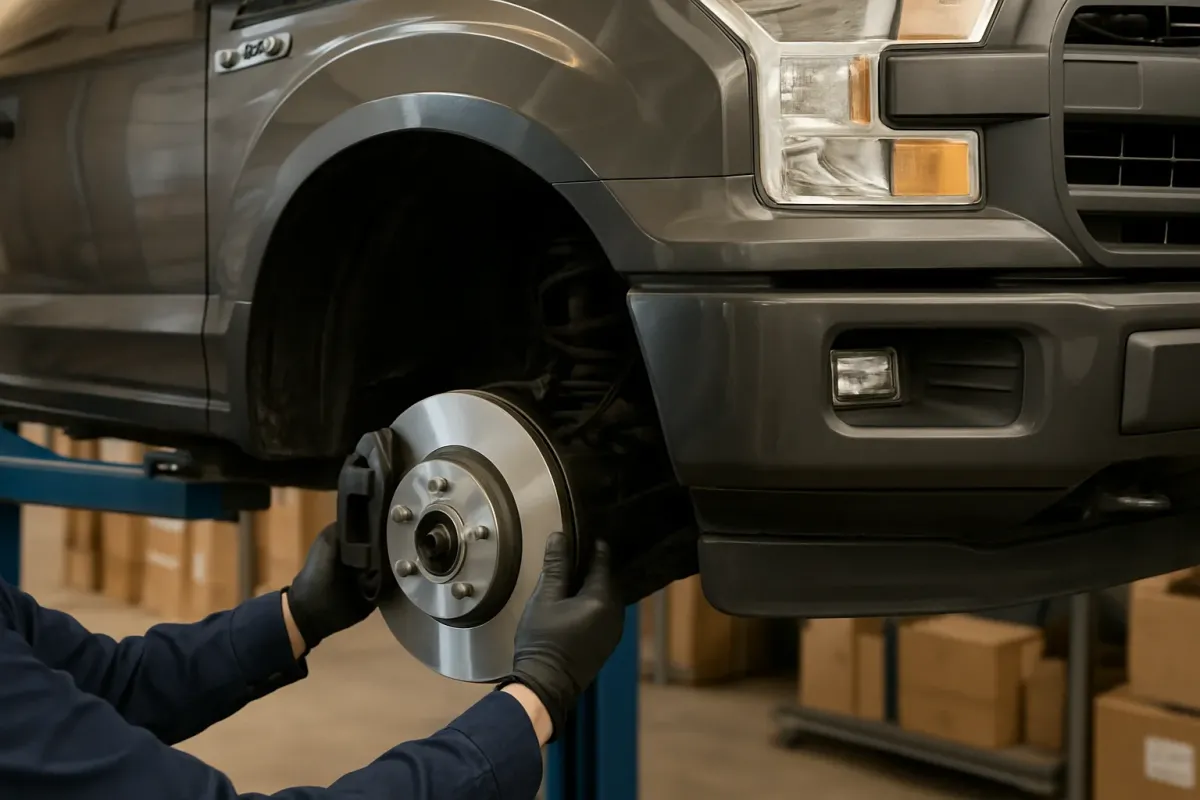
Wheel bearings and wheel hubs carry the vehicle weight and allow the wheel to rotate. On the Dodge Ram 1500, complete wheel hub units that house the wheel bearing, hub and, depending on the version, the ABS sensor are often used on the front axle.
Typical wear symptoms are grinding noises while driving, increasing play in the wheel and vibrations that change when cornering. A front wheel bearing failure should not be ignored, as in extreme cases the wheel guidance can be lost.
In the shop you will find corresponding units, for example a front wheel hub with wheel bearing without ABS for certain Ram 1500 models or a version with ABS for other model years. Whether your vehicle uses a hub with or without an ABS sensor can be determined from the vehicle documentation or by visually comparing the existing unit.
Suspension on Front and Rear Axles
The suspension of the Dodge Ram 1500 is designed for commercial use but often needs to be comfortable when unladen in everyday use. Depending on model year and equipment, front struts (springs with shock absorbers) or other solutions may be fitted, while the rear often uses leaf springs or coil springs with separate shock absorbers.
Shock Absorbers and Struts
Shock absorbers dampen the oscillations of the springs and ensure tire contact with the road. If they are worn, the Ram will "bounce", oscillate after undulations and brake worse because the wheels temporarily lose traction.
For the Dodge Ram 1500 there are different damper lengths and mounting types depending on the model year. For example, rear shock absorbers left and right are available for certain Ram 1500 models. When selecting, pay attention to:
- Model year and model generation
- Rear axle design (leaf spring / coil spring)
- Drivetrain (2WD/4WD), as mounting points can differ
Suitable mounts and bearings can be found in the category Stoßdämpfer- & Federbeinhalterungen.
Leaf Springs and Coil Springs
On the rear axle of the Dodge Ram 1500, leaf springs or coil springs provide the main load-bearing function. They determine both ride height and possible payload. Fatigued springs are recognizable by a sagging rear, uneven vehicle height left/right or contact of the bump stop already under normal load.
Replacement or heavy-duty springs should always be chosen axle-wise and matched to the vehicle. Use the category Leaf & Coil Springs for selection and compare the specifications with your vehicle papers and the actual vehicle specification.
Steering and Suspension on the Rear Axle
On the rear axle of the Dodge Ram 1500, control arms, bushings and bearings also play an important role for stability and handling, especially on models with multi-link rear suspension.
For Ram 1500 Classic models there are, for example, rear upper and lower control arms as replacement parts, such as a rear upper control arm or rear lower control arm. Worn rubber bushings cause clunking, tracking problems and an unsettled rear over bumps.
In general: always check rubber bushings and bearings axle-wise and, if in doubt, replace in pairs to avoid asymmetric handling. Further bearing and bushing components can be found in the category Radlager, -naben & Buchsen.
Choosing the Right Parts for Your Ram 1500
Because there are many variants of the Dodge Ram 1500 in circulation depending on model year and configuration, precise identification of parts is crucial. Proceed systematically when selecting parts:
- Have the registration document (key numbers), VIN and model year ready.
- In the shop first open the main category Federung & Lenkung and then choose the appropriate subcategory (e.g. control arms, tie rods, shock absorbers).
- Check that drivetrain (2WD/4WD), cab type and, if applicable, "Classic" or the new model generation match.
- Visually compare the existing part (mounting points, shape, number of holes, plug for ABS sensor etc.).
- If unclear, verify the data in the workshop manual or the official vehicle documentation.
Do not rely solely on rough model year information. Minor facelifts can lead to different parts even though the model year may appear similar.
Installation Instructions for Suspension and Steering Parts
The Dodge Ram 1500 is robust but heavy. Work on suspension and steering is safety-relevant. If you do the work yourself, be sure to observe the following basic rules.
General Safety Rules
- Always park the vehicle on firm ground, select a gear or parking position and engage the parking brake.
- Work only with approved floor jacks and stable jack stands; never rely on the jack alone.
- Secure wheels with chocks, especially when working on the opposite axle.
- For load-bearing parts (springs, struts) use suitable spring compressors and follow the manufacturer's instructions.
- Look up torques and tightening sequences in the workshop manual or official documentation. Do not guess.
Typical Work Steps (Examples)
Exact steps vary by model year and axle layout. The following points give you an orientation but do not replace a repair manual.
Replacing a Front Control Arm
- Raise the front of the vehicle, support on stands and remove the front wheel.
- Secure the brake line and ABS cable (if present) so they are not put under tension when loosening the control arm.
- Disconnect the ball joint from the knuckle (remove retaining ring and nut, use a puller if necessary).
- Undo the control arm bushing bolts on the frame and remove the control arm.
- Install the new control arm in reverse order, but do not torque the bolts to final torque until the vehicle is at normal load condition (or on a lift with the suspension loaded). This prevents preloading the rubber bushings.
- Obtain torques exclusively from the official documentation and tighten with a torque wrench.
Changing Rear Shock Absorbers
- Raise the rear, support the axle (e.g. with an additional jack or stands under the axle); wheels do not necessarily have to be removed but they can make the work easier.
- Undo the upper and lower shock absorber mounts. Treat rusty bolts with penetrating oil in time.
- Remove the shock absorber and compare with the new part (length, mounting type, bushings).
- Install the new shock absorber, tighten fittings by hand and then tighten to the correct torque according to the workshop manual.
Replacing the Front Wheel Hub
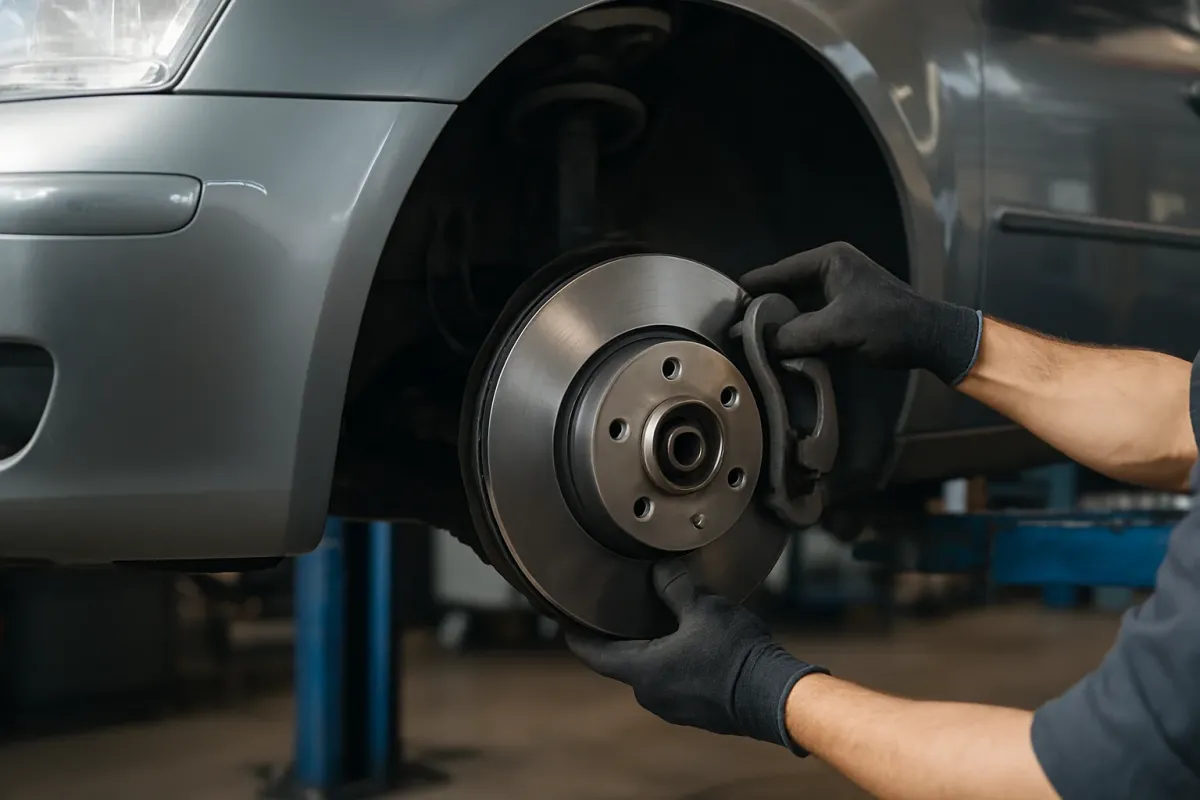
- Remove the front wheel, disassemble the brake caliper and brake disc and hang them safely, do not put the lines under load.
- Disconnect the ABS sensor plug (if present).
- Loosen the hub mounting on the steering knuckle and pull off the hub. A puller may be required depending on condition.
- Clean the mating surface carefully, fit the new hub and fasten it with the torque values specified in the documentation.
- Reinstall the brake disc and caliper, connect the ABS plug, mount the wheel and tighten the lug nuts to the specified torque.
Follow-up Work and Inspection
After working on suspension or steering, some steps are mandatory to ensure safe handling.
- Wheel alignment: After replacing control arms, tie rods, wheel bearings or springs, a professional wheel alignment with adjustment of toe, camber and caster should always be performed.
- Test drive: Careful test drive on varied road surfaces, pay attention to noises, steering wheel position and braking behavior.
- Check fasteners: After a few hundred kilometers visually check critical fasteners (where accessible) again to ensure everything is still tight.
- Inspect tyre wear: Unusual tire wear indicates incorrect alignment or worn components.
Frequently Asked Questions
Can I replace individual suspension parts on the Dodge Ram 1500 or always axle-wise?
Theoretically many components can be replaced individually. From a technical perspective, however, it makes sense to renew safety-relevant parts such as shock absorbers, springs or control arms axle-wise where possible. This avoids asymmetric handling. In the case of a clearly localized single defect (e.g. a damaged ball joint), a one-sided replacement can also be sensible, provided the opposite side is inspected for wear.
Where do I find the correct tightening torques for my Dodge Ram 1500?
Tightening torques depend on model and model year and can even depend on engine or axle configuration. Reliable values are found in the official workshop manual, in the manufacturer's technical documents or in professional databases for automotive workshops. Avoid guessing torques, especially on suspension and steering parts.
Is a wheel alignment always required after replacing shock absorbers or control arms?
After replacing control arms, tie rods, tie rod ends or other steering-related parts, a wheel alignment is mandatory. A simple shock absorber replacement without disassembling tie rods may approximately preserve geometry, but an alignment is still recommended to avoid tire wear and unstable handling. If abnormalities in handling appear, have it aligned immediately.