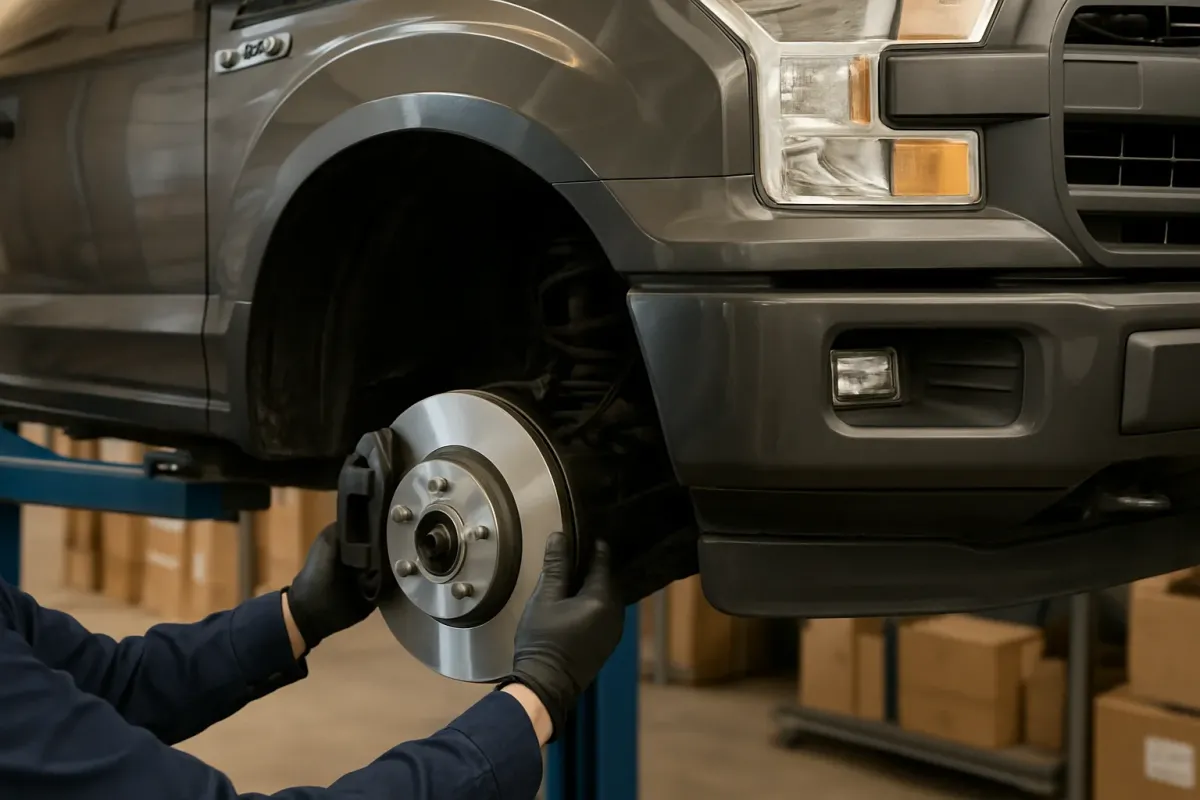
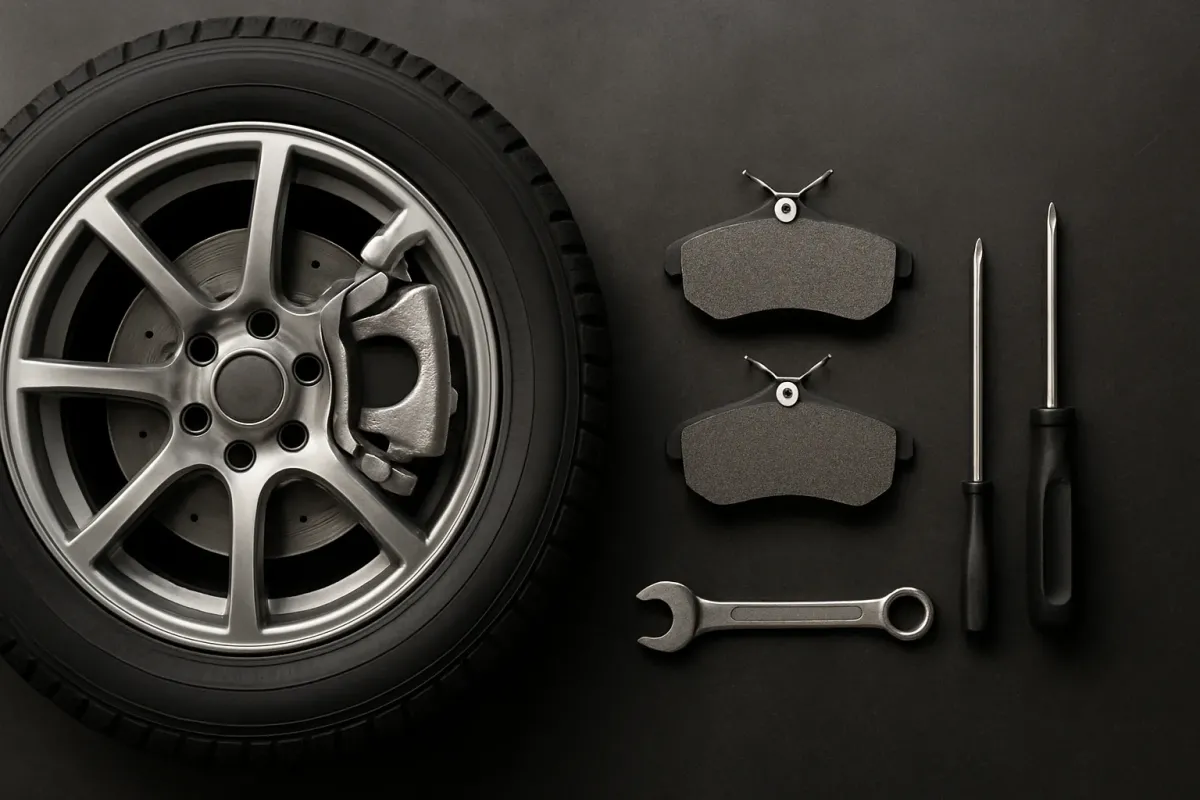
Brakes & Brake Parts for the Chrysler 300 C: Selection and Installation
How to choose and install brakes and brake parts suitable for your Chrysler 300 C – from brake discs and pads to calipers and small parts.
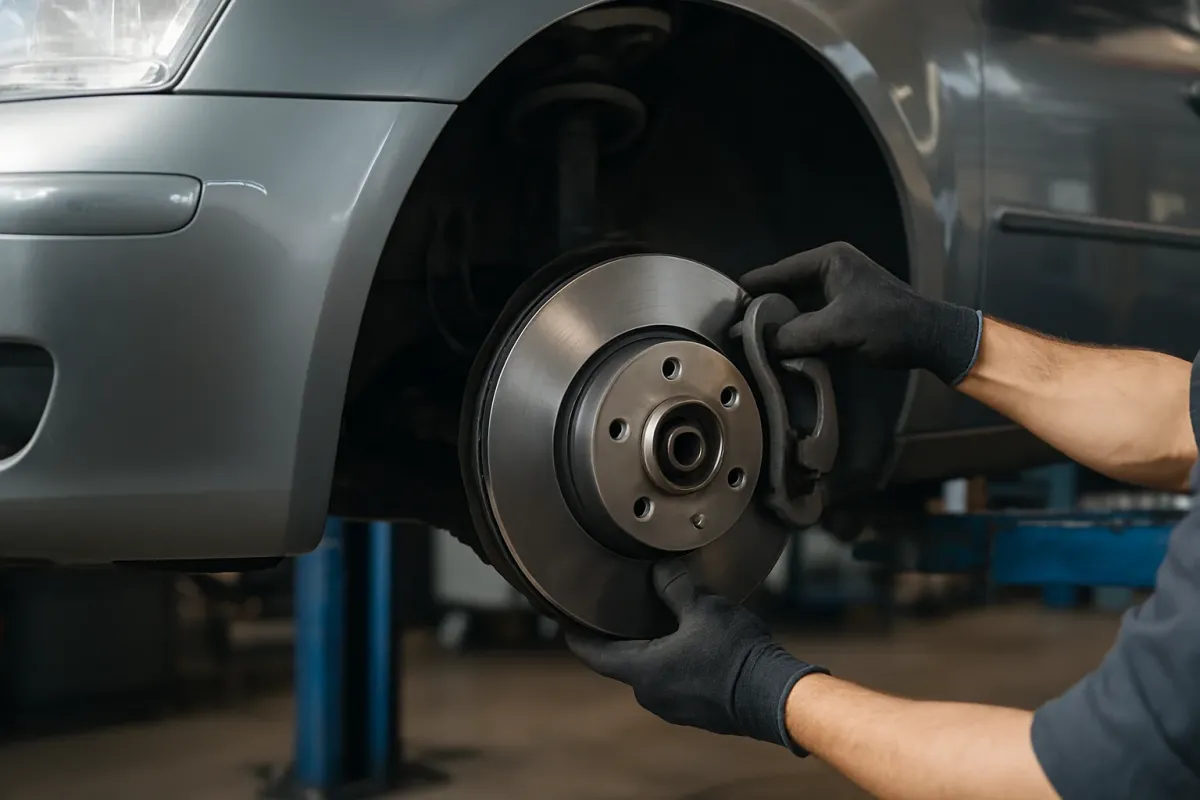
Overview: Brakes on the Chrysler 300 C
The Chrysler 300 C is heavy and powerful, so the load on the braking system is correspondingly high. Those who work on their own cars should carefully select the appropriate brakes and brake parts and pay attention to correct fitment and professional installation. This guide focuses exclusively on the Chrysler 300 C and provides practical orientation from parts selection to installation.
A good starting point for selection are the shop categories, in particular the overview page Bremsen & Bremsenteile, where you can find all relevant assemblies.
Important components of the braking system on the Chrysler 300 C
The disc braking system of the Chrysler 300 C essentially consists of the following parts:
- Brake discs (rotors): Front and rear, depending on the version in different sizes and possibly in special designs (e.g. drilled/slotted).
- Brake pads: Matched to the respective disc and caliper, different for front and rear axles.
- Calipers and caliper brackets/carriers: Guide the pads, contain pistons, guide pins and seals.
- Brake hoses and lines: Supply the calipers with brake fluid.
- Parking brake: Depending on the version as an in-drum-in-disc solution or other design, with its own brake shoes and cables.
- Wear sensors, backing plates and small parts: Retaining springs, clips, shims and anti-squeal shims.
For the Chrysler 300 C there are different parts depending on engine, equipment and brake package (e.g. high-performance brakes). Always check the exact data in the vehicle documents before ordering and use the vehicle selector in the shop.
Selecting suitable brake parts for the Chrysler 300 C
Record vehicle data correctly
Since there are different brake variants for the Chrysler 300 C, unambiguous identification of your vehicle is crucial. Use:
- Vehicle Identification Number (VIN) from the vehicle documents
- Entries in the service booklet or original equipment
- Stampings/numbers on existing brake discs or calipers (if present)
If the information in the shop does not clearly match your vehicle data, additionally check the dimensions (disc diameter, thickness, pad shape) and compare them with the parts currently on the vehicle.
Brake discs for the Chrysler 300 C
Standard and performance-oriented brake discs are available for the Chrysler 300 C. In the category Bremsscheiben you will find suitable variants, partly also as drilled or slotted designs.
An example of a performance-oriented set are component kits such as drilled brake discs with pads for the front axle, which are intended for certain versions (e.g. sporty variants). Pay particular attention to notes on compatibility with your Chrysler 300 C.
Important comparison features for brake discs:
- Outer diameter (must fit exactly)
- Disc thickness (new and minimum thickness, see vehicle documentation)
- Bolt circle and centre bore
- Type of mounting (e.g. with/without retaining screw)
Brake pads for the Chrysler 300 C
The brake pads must match the disc, the caliper and the equipment. In the category Bremsbeläge you will find different compounds and designs.
Examples specifically for the Chrysler 300 C:
- Brake pads / brake blocks front for Chrysler 300C … – suitable for certain front axle brake systems.
- Brake pads / brake blocks rear for Chrysler 300C … – for the rear axle with the standard braking system.
- Brake pads / brake blocks rear for Chrysler 300C … Brembo brakes – specifically for vehicles with a Brembo braking system.
Whether your Chrysler 300 C is equipped with standard or, for example, a Brembo system, you can find out from the vehicle equipment or by visually comparing the existing calipers and the labelling.
Brake shoes, calipers and small parts
The parking brake of the Chrysler 300 C can, depending on the version, have its own brake shoes, which can be found in the category Bremsbacken. When ordering, pay attention to axle (front/rear), system and exact model allocation.
Defective or seized calipers should be replaced or overhauled if in doubt. In the category Bremssättel & -halterungen you will find suitable components. Seals, guide pins, circlips, bleeder nipples and other small parts are usually listed in the Other brake parts section.
Complete kits versus individual parts
When doing extensive work on the braking system of the Chrysler 300 C, the question arises whether individual components or a complete kit make more sense.
Advantages of complete brake kits
In the category Bremsenkomplettsätze you will find sets that include discs, pads and sometimes small parts. Advantages:
- Parts are matched to each other (pad compound matched to the disc)
- Lower risk of fitment issues if the kit is explicitly listed for the Chrysler 300 C
- All wear parts on one axle are renewed at the same time
When individual parts make sense
- If one side has already been renewed and only the opposite side is worn (however, axle-wise replacement is still always recommended).
- For specific problems, e.g. only defective calipers.
- If you deliberately want to combine different components (e.g. a specific pad compound with a standard disc).
Installation notes: brake discs and brake pads front/rear
The following instructions describe the typical steps for replacing discs and pads on the front and rear axles of the Chrysler 300 C. Details such as tightening torques, fluid capacities and special procedures (e.g. electronic parking brake, if present) should always be taken from the official vehicle documentation.
Preparation
- Park the vehicle on level ground, engage first gear/P position, release the parking brake (unless it is active on the axle to be worked on).
- Loosen the wheel nuts slightly, raise the vehicle and securely support it on jack stands.
- Remove the wheels completely.
- Prepare suitable tools (socket set, Torx/internal hex depending on version, brake piston retractor, torque wrench, wire for hanging the caliper, brake cleaner, copper or ceramic paste, if necessary bleeding tool).
Brake pads and discs on the front axle
- Inspect the braking system: Check thickness of old pads, condition of discs, seals and brake hoses.
- Release the caliper: Loosen guide pins or caliper bolts. Remove the caliper and hang it with wire on the strut to avoid stressing the brake hose.
- Remove old pads: Pull pads out of the carrier, note or photograph retaining springs and clips.
- Remove carrier if necessary: Unscrew the caliper carrier to be able to remove the disc.
- Remove old brake disc: Treat the rust ring on the hub face with penetrating oil if necessary. If present, loosen the disc retaining screws.
- Clean hub face: Thoroughly remove rust and dirt so that the new disc seats flat.
- Fit new disc: Remove oil film (corrosion protection) with brake cleaner, mount the disc, if applicable tighten retaining screw to the prescribed torque.
- Clean pad guides: Clean sliding surfaces in the caliper carrier, apply a thin layer of suitable high-temperature paste (not on friction surfaces!).
- Retract brake piston: Slowly push the piston back into the caliper with a suitable tool. Monitor the brake fluid level in the reservoir.
- Install new pads: Use new clips/springs, insert pads correctly, observe anti-squeal shims.
- Fit caliper: Place the caliper over the new pads, tighten bolts to the manufacturer’s specified torque values.
Brake pads and discs on the rear axle
The procedure on the rear axle of the Chrysler 300 C is similar, but there may be additional steps for the parking brake or integrated brake systems.
- Release parking brake: Before disassembly ensure the parking brake is fully released.
- Dismantle caliper: Similar to the front axle remove caliper and if necessary caliper carrier.
- Check parking brake: For discs with integrated drum, inspect the inner drum brake (shoes, springs, adjuster). Replace worn parts.
- Replace rear disc: Pull off the disc, clean any integrated drum if necessary, fit the new disc.
- Fit new pads: As at the front, pay attention to correct position of springs/clips.
- Check cable and parking brake adjustment: Adjust according to the vehicle documentation.
Final work after brake replacement
- Check brake fluid level: After retracting the pistons and installing the new pads, check the level in the reservoir.
- Build up pedal travel: Before starting, carefully press the brake pedal several times until a clear pressure point is felt.
- Check for leaks: Visually inspect all connections, bleeder screws and hoses for leaks.
- Fit wheels: Fit wheels, tighten wheel nuts in a star pattern to the manufacturer’s specified torque.
- Test drive: Gentle functional test drive with several stops from low speed. Observe for uneven behaviour, noises or pulling to one side.
Properly bedding in brakes
New brake discs and pads on the Chrysler 300 C must be carefully bedded in so that they reach their full performance and do not overheat.
- During the first kilometres brake only moderately, avoid full stops from high speed (unless absolutely necessary).
- Perform several stops from moderate speed with light to medium pedal force, allowing cooling intervals in between.
- Avoid prolonged stationary periods with hot brakes (e.g. standing at a traffic light immediately after heavy braking) to prevent local overheating of the discs.
More detailed instructions for the bedding procedure can be found, if available, in the documentation of the specific brake manufacturer and in your vehicle’s owner manual.
Typical problems and causes on the Chrysler 300 C
- Brake acting on one side: Often caused by seized guide pins or pistons. Clean or refurbish the caliper guide.
- Steering wheel shimmy when braking: Can result from warped or unevenly worn discs. Clean the hub face thoroughly, respect torque values, replace discs if necessary.
- Squealing noises: Often due to missing or incorrectly installed anti-squeal shims, contaminated sliding surfaces or low-quality pad compound. Clean sliding points, apply appropriate paste sparingly.
- Long pedal travel: Possibly air in the system or problems with the rear axle/parking brake. Properly bleed the braking system, check components.
If in doubt or in case of safety-relevant abnormalities, the braking system of the Chrysler 300 C should always be checked by a specialist workshop.
Frequently asked questions
How do I recognize which braking system (e.g. standard or Brembo) my Chrysler 300 C has?
Check the vehicle documents, the service booklet and the labelling on the existing calipers. Additionally, compare the brake components (design of the calipers, disc diameter) with the information in the online shop. If in doubt, have the braking system assigned using the VIN.
Do brake discs and pads on the Chrysler 300 C always have to be replaced axle-wise?
It is recommended to always renew discs and pads axle-wise, that is both sides of an axle at the same time. Only then is it ensured that braking force and wear are symmetrical and the vehicle does not pull to one side under braking.
Where can I find the correct tightening torques for the brakes on the Chrysler 300 C?
Use only the information in the official vehicle documentation (workshop manual, manufacturer’s technical documents). There you will find the specific torques for calipers, caliper carriers, wheel bolts and other connections. Do not guess or tighten “by feel”.