Brakes & Brake Parts for Ford F-150: Selection and Installation
How to choose suitable brakes and brake parts for your Ford F-150 and avoid common mistakes during installation.
Overview: Brakes on the Ford F-150
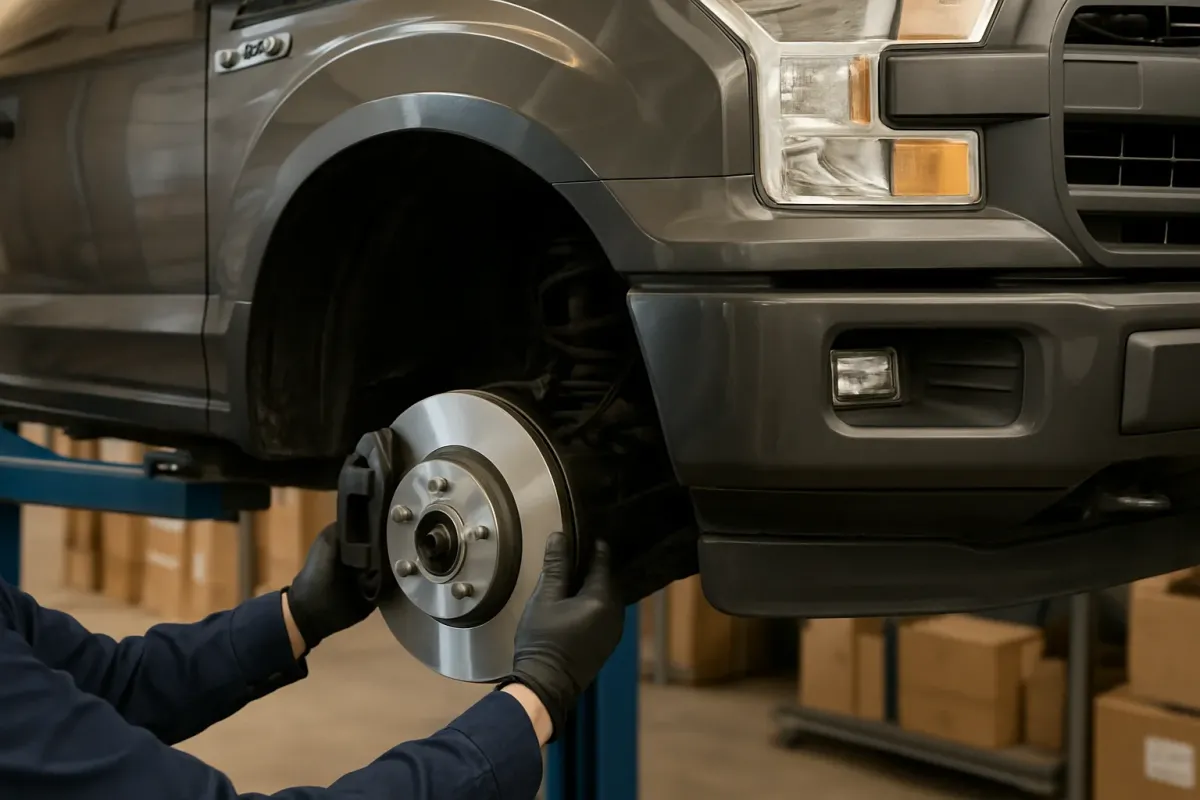
The Ford F-150 is a heavy pickup often used with a trailer, cargo or off-road. Accordingly, demands on brakes and brake parts are high. If you work on the vehicle yourself, three points are particularly important: finding the right parts, checking the correct specification and ensuring professional installation.
This guide deals exclusively with brakes and brake parts for the Ford F-150. Specifications such as brake rotor diameter, brake pad type or tightening torques can vary depending on model year, engine, axle and brake system. Always check the information in the vehicle documents and compare it with the parts selection in the shop.
Key brake components on the Ford F-150
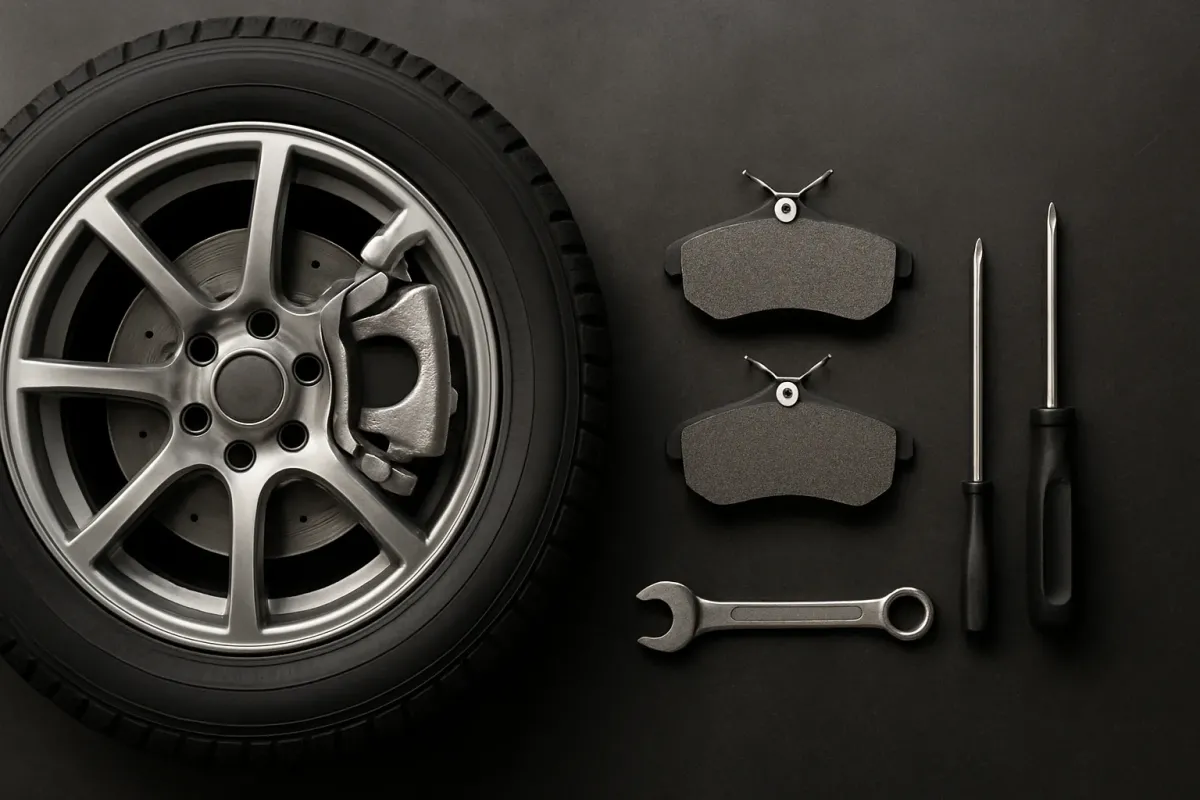
The brake system of the Ford F-150, as usual, consists of several components that are matched to each other. For selecting replacement parts you should know the basic functions:
- Brake rotors (front/rear): Disc brakes at the front and, depending on the specification, also at the rear axle. Diameter, thickness and mounting vary by model.
- Brake pads: Press against the brake rotor and convert braking force. Wear parts that must be replaced regularly.
- Brake calipers and brackets: Hold the pads and press them onto the rotor. Fixed caliper or floating/sliding caliper, depending on specification.
- Brake shoes / drum brake: On the F-150 often still used as the parking brake in the rear hub or on certain configurations as the service brake on the rear axle.
- Backing plates / splash shields: Protect the brake rotor and components from dirt and water.
An overview of suitable replacement parts can be found in the category Bremsen & Bremsenteile. Always select your specific vehicle (model, year, drive type, etc.) in the shop.
Finding suitable brake rotors for the Ford F-150
Brake rotors for the Ford F-150 mainly differ in:
- Diameter and thickness
- Vented / solid
- Specification for front or rear axle
- Number of wheel studs and bolt circle
- Version depending on drivetrain (e.g. 2WD / RWD or 4WD)
An example is the complete set 2x brake rotors + brake pads front for Ford F-150 1999 - 2003 2WD RWD. It clearly states that the set only fits certain model years and 2WD/RWD models. You must always compare such notes with your vehicle data.
Further brake rotors can be found in the category Bremsscheiben. When comparing the old and the new rotor, pay attention to:
- same number and position of mounting holes
- comparable hat height (distance between mounting face and friction surface)
- same or approved dimensions for thickness and diameter according to manufacturer specifications
Exact dimensions and approvals should be checked using the vehicle identification number (VIN) and the technical documentation of your Ford F-150.
Brake pads for the Ford F-150: material and fit
For brake pads for the Ford F-150, besides the physical fit, material and intended use are important:
- Organic / semi-metallic: Robust, often produce somewhat more brake dust and possibly more noise, but sometimes better cold braking performance.
- Ceramic brake pads: Less brake dust, often quieter braking. Well suited for many road uses.
- ECE-approved pads: Important for use on European roads.
The shop offers, for example, Ceramic brake pads rear + accessories for Ford Expedition/F150 ECE and various specific pads for certain Ford F-150 model years, for example:
- Brake pads / brake linings rear for Ford F-150 F150 2012 - 2019
- Brake pads / brake linings rear for Ford F-150 2015 - 2020 Electric Parking
- Brake pads / brake linings rear for Ford F-150 F150 Expedition 1996 - 2004
Since the pad shape varies by caliper, if in doubt remove the old pad and compare it with the product images and specifications in the shop. Technical data such as minimum thickness and permissible wear limit are listed in the vehicle documentation or in the workshop manual.
Complete kits, brake calipers and other parts
For the Ford F-150 it is often worth replacing the complete front or rear axle assembly, especially if rotors and pads are already significantly worn or have run unevenly. In the category Bremsenkomplettsätze you will find kits with matched components.
If the brake pads wear unevenly or if one wheel becomes significantly hotter than the others, a seized brake caliper may be the cause. In this case the calipers and brackets should be checked and possibly replaced. Relevant parts can be found under Bremssättel & -halterungen.
Backing plates or splash shields can also corrode and should often be replaced at the same time if heavily rusted. An example are the 2x backing plate front / splash shield for Ford F-150 Lincoln Mark LT 2004 - 2008. Always check before ordering whether this version fits your F-150.
Brake replacement on the Ford F-150: preparation
Before working on the brakes of the Ford F-150, you should note the following points:
- Work only on a firm, level surface.
- Lift the vehicle with a suitable jack and secure with jack stands.
- Personal protective equipment: gloves, safety glasses, try to work in a low-dust manner.
- Do not blow brake dust out with compressed air; bind it with brake cleaner and pick it up with a cloth.
- Always work axle-wise (e.g. both front brakes), to ensure even braking performance.
The exact tightening torques for wheel bolts, caliper bolts and other fasteners must be looked up in the technical documentation of your Ford F-150 or in a suitable workshop manual. Do not estimate them.
Step-by-step guidance: front disc brakes
The following description is general and may vary depending on the model year and version of your Ford F-150. It does not replace a workshop manual but provides orientation:
- Remove wheel: Loosen lug nuts, raise the vehicle, remove the wheel.
- Inspect caliper: Visual check for leaks at the brake piston and condition of the rubber boots.
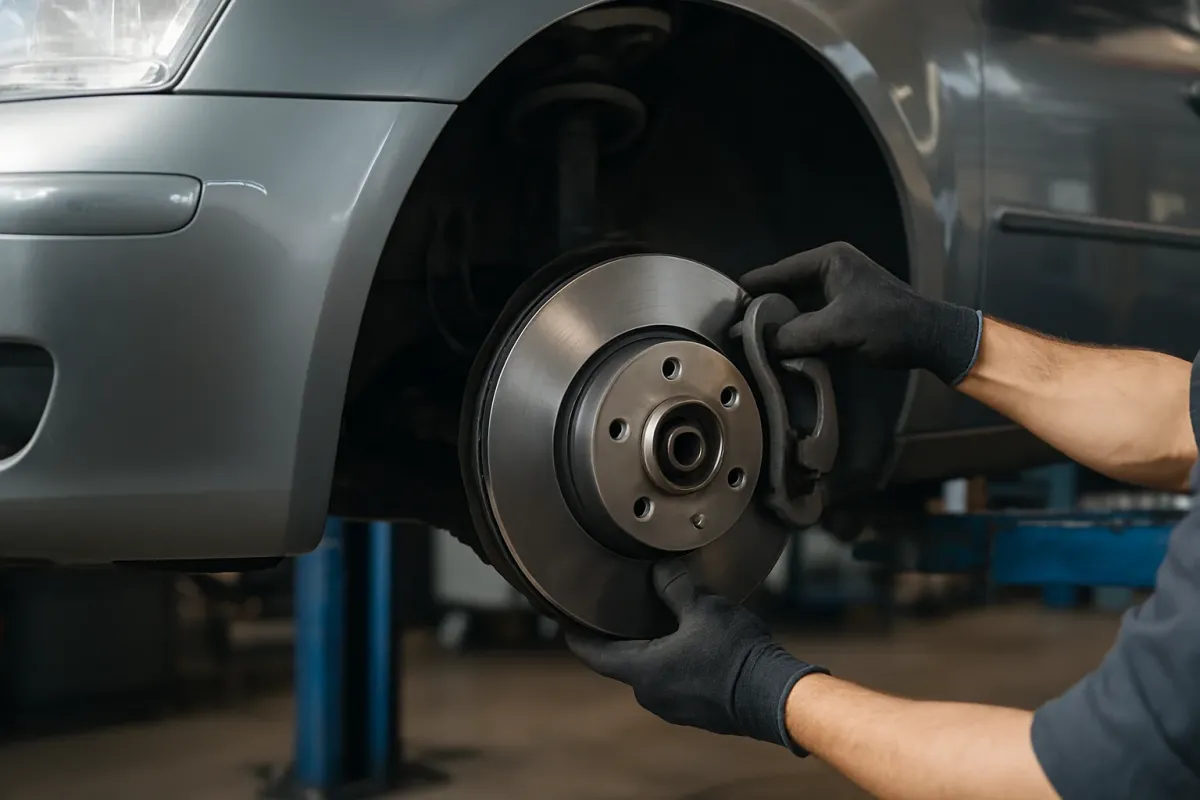
- Remove caliper: Loosen the slide pin bolts of the floating caliper (or the appropriate fastenings for a fixed caliper) and remove the caliper. Hang the caliper on the strut with wire or a hook; do not let it hang from the brake hose.
- Remove brake pads: Remove old pads and any retaining clips from the bracket.
- Remove rotor: Depending on the version, remove retaining screws and holding plates, then pull off the rotor. For stuck rotors, loosen rust with penetrating oil and use a rubber mallet.
- Clean seating surfaces: Thoroughly clean the hub, remove rust and dirt so the new rotor sits flush.
- Install new rotor: Fit new rotor, if applicable fix with retaining screws (torques according to vehicle documentation).
- Check guide pins: Check for smooth movement, clean if necessary and lightly grease with appropriate brake grease (observe manufacturer instructions).
- Retract brake piston(s): Gently push back the piston with a suitable piston retraction tool, watching the brake fluid level in the reservoir.
- Install new brake pads: Fit new pads and any new retaining clips. Apply approved brake grease sparingly to metallic sliding surfaces; friction surfaces must remain free of grease.
- Mount caliper: Place caliper over pads and rotor and tighten to manufacturer specification.
- Install wheel: Mount wheel, tighten lug nuts in a criss-cross pattern (torque according to Ford documentation).
Rear specifics: drum brake / parking brake
On the rear axle of the Ford F-150 there are different versions, including:
- Disc brake with integrated drum for the parking brake
- Variants with electric parking brake
Items like Brake pads / brake linings rear for Ford F-150 2015 - 2020 Electric Parking are explicitly intended for versions with an electric parking brake. Here you must pay very close attention to the exact description and follow the manufacturer's instructions in the workshop manual when working on the brake system (e.g. deactivating or setting the electric parking brake into service mode).
For drum / parking brakes additionally apply:
- Check return springs and self-adjusters for function and corrosion.
- Do not blow brake dust out of the drum; bind it with brake cleaner.
- Take photos when disassembling so that the position of springs and levers can be restored exactly during reassembly.
Suitable brake shoes and other accessories for the rear axle of your Ford F-150 can be found via the vehicle search in the shop.
After installation: inspection and bedding-in
After every brake service on the Ford F-150 the following steps are mandatory:
- Depress the brake pedal several times until a firm pressure point is reached (pistons and pads seated).
- Check the brake fluid level in the reservoir and top up to the correct level if necessary.
- Check that the wheels rotate freely and that there are no rubbing or knocking noises.
- Test drive with gentle braking maneuvers on low-traffic roads.
New brakes should always be bedded in. Specific recommendations (e.g. number and intensity of braking applications) may vary depending on pad material. Follow the instructions included with the pads or the guidance in the workshop manual.
Typical mistakes during brake service on the Ford F-150
- Wrong parts selection: Not considering model year, drivetrain or brake version. Always use VIN and vehicle documents.
- Hub not cleaned: Leads to runout and vibrations during braking.
- Guide pins dry or seized: Causes uneven pad wear and can lead to overheating.
- Incorrect or guessed torques: Can lead to loose or overstressed bolts. Use torque values exclusively from Ford documentation.
- Brakes not bled when necessary: Spongy pedal and increased stopping distances.
Other replacement parts and accessories for the Ford F-150
In addition to rotors, pads and calipers, brake service on the Ford F-150 often requires small parts such as guide pins, bleed screws, spring kits, sensors (wear indicator, ABS) or brake lines. In the category Sonstige you will find further accessories related to the brake system.
Basic rule: If a component is heavily corroded or damaged, replace it as part of the repair rather than attempting a temporary fix. On the heavy Ford F-150 a reliable brake system is safety-critical.
Frequently Asked Questions
How do I reliably find the correct brake parts for my Ford F-150?
Always use the exact vehicle data from the registration document and the vehicle identification number (VIN) and enter these in the vehicle search in the shop. Also compare product images and technical specifications with the removed parts. If in doubt, consult Ford vehicle documentation or a brand specialist.
Do I always have to replace both sides of an axle on the Ford F-150?
Yes, brake pads and rotors on the Ford F-150 should generally be renewed axle-wise, i.e. left and right together. This ensures even braking performance and prevents differences in pad thickness or rotor surface that can cause pulling during braking.
What tightening torques apply to calipers and wheel bolts on the F-150?
The tightening torques depend on model year, axle and the specific brake system fitted. Do not rely on approximate values. The correct torque values can only be found in the technical documentation from Ford, in the owner's manual (if specified) or in a suitable workshop manual for your Ford F-150.