Rear window louver for US‑cars: selection and installation
How to choose the right rear window louver for your US‑car and install it safely – explained step by step.
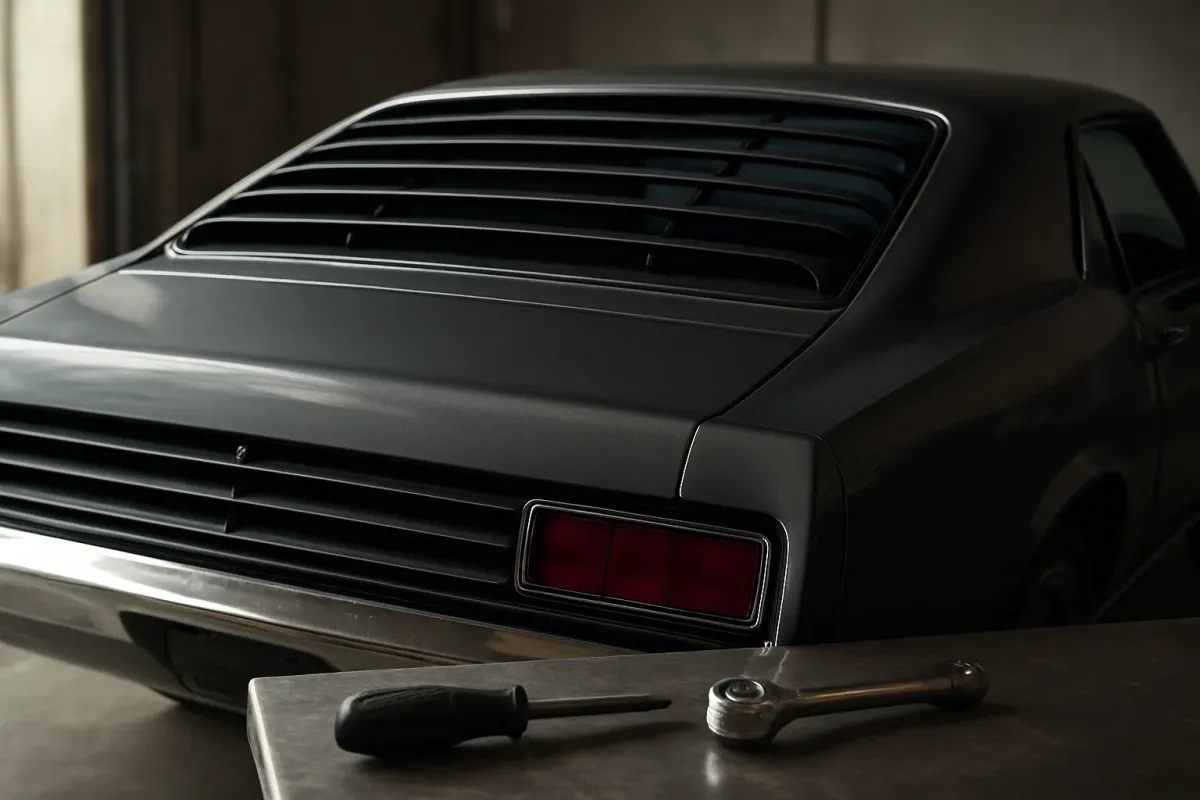
What is a rear window louver and what is it used for?
A rear window louver is a slatted cover mounted on the outside of the rear window. It is typical for many US coupes and muscle cars and serves several functions:
- Sun protection: Reduces direct sunlight entering the interior.
- Appearance: Accentuates the sporty fastback or coupe line.
- Privacy: Makes it harder to see into the interior from the rear.
- Protection: Partially protects the rear window from leaves and light dirt.
It is important that the louver does not unacceptably restrict rear visibility and that the mounting remains secure even at high speeds.
Selection: Which louver fits which US‑car?
Rear window louvers are generally vehicle‑specific. A universal solution often does not match the contour or curvature exactly. For modern US cars such as the Ford Mustang, Chevrolet Camaro and Dodge Challenger there are specifically adapted variants.
Vehicle‑specific examples
- Ford Mustang 2015–2023/2026: For the current Mustang generation various louvers are offered, among others in matte or glossy finishes and sometimes with TÜV documents, e.g. Black matte rear window louver with TÜV for Mustang 2015–2023 or black glossy for Mustang 2015–2026.
- Chevrolet Camaro 2016–2023: For the Camaro there are both pure rear window louvers and variants that additionally include side window covers, for example Rear window and side window cover 2016–2023 or black glossy rear window louver 2016–2023.
- Dodge Challenger 2008–2023: The classic coupe shape of the Challenger is particularly suitable for louvers. There are, for example, glossy variants with and without TÜV documents, such as black glossy 2008–2023 and glossy with TÜV 2008–2023.
An overview of further versions and vehicles can be found in the category Rear window louver.
Important selection criteria
- Vehicle model and year: Always compare exactly with the description (e.g. Mustang 2015–2023 vs. 2015–2026).
- Finish: Black matte or black glossy. Matte appears more technical and understated, glossy emphasizes the lines more strongly.
- Material: Mostly plastic (ABS or similar plastics). Weight and stiffness should be in a sensible ratio. Specific material details can be found in the respective product description.
- Mounting method: Usually with 3M adhesive pads or mounting brackets that are attached to the glass or bodywork. Details are in the respective installation instructions.
- TÜV/registration: Some products are explicitly offered with TÜV documents. If legal questions are open, you should clarify with an inspection organization or registration authority before installation whether approval is required.
Checking fitment correctly
Good fitment is crucial for appearance, safety and sealing. This is how you check before final installation whether everything fits:
- Read the item description carefully: Does the model, body shape and year match? The rear window shape can change with facelifts.
- Dry fitting: Carefully place the louver without adhesive pads or still with protective film. Do not drag it across the glass to avoid scratches.
- Check edges: The contour should sit evenly all around without the louver resting on body edges.
- Check the trunk lid: Open and close the tailgate or trunk lid several times. Nothing should rub or jam.
- Rear wiper (if present): On vehicles with a rear wiper check whether the wiper sweep is blocked by the louver. If necessary the rear wiper may need to be removed; follow the vehicle documentation for this.
If the louver does not sit cleanly in the dry fit or is under strong tension at contact points, it should not be installed. In that case consult the seller.
Preparation: surface and tools
For a permanent attachment a clean, grease‑free rear window is essential. Most louvers are supplied with pre‑mounted or enclosed double‑sided adhesive pads. Check all parts before you begin:
- Rear window louver (possibly multi‑part)
- Mounting pads / adhesive pads or mounting brackets
- Cleaning wipes (if included in the set)
- Manufacturer's installation instructions
Additionally you will usually need:
- Isopropanol or a suitable glass cleaner (without silicones)
- Soft, lint‑free cloths
- Plastic wedge or squeegee
- Adhesive tape (e.g. painter's tape) for marking
- Possibly an assistant for positioning
Do not use aggressive solvents that could damage the rear window defroster or rubber seals. When in doubt always follow the instructions in the vehicle manual and the product instructions.
Installing a rear window louver: step by step
The specific installation depends on the particular product. Below you will find a typical procedure for louvers with adhesive pads. Binding information is always in the enclosed instructions.
1. Prepare the vehicle
- Park the vehicle in a dry, dust‑free environment (garage or covered parking).
- Thoroughly clean the rear window, including the area of the edges and any films.
- Allow the glass to dry completely.
2. Determine position
- Place the louver for a dry fit and center it.
- Check clearances to the side and upper seals.
- Once the position is found, mark the glass with tape (e.g. at the corners).
3. Prepare adhesive areas
- Identify adhesive dots or mounting feet on the louver.
- Degrease the rear window again in the areas where it will later be bonded using isopropanol.
- If adhesion promoters (primers) are included, use them according to the product instructions.
4. Activate adhesive pads and fit the louver
- Remove protective films from the adhesive pads only shortly before placing.
- Align the louver using the previously set tape marks.
- Place from the center outwards and apply even pressure to all adhesive points (observe manufacturer specifications for pressure duration).
- For multi‑part louvers align the segments one after the other so that the slats run parallel later.
Many adhesives only reach full bond strength after several hours. During this time the vehicle should preferably not be moved and the louver should not be loaded. Please refer to the adhesive manufacturer’s or product instructions for exact curing times.
Follow‑up work and inspection
- Sealing: After the first drive in the rain check inside the vehicle whether water is entering at affected sealing lines. Normally the louver does not interfere with the glass seal, but a check does no harm.
- Field of view: Check in the rearview mirror whether you have become accustomed to the slightly changed view and that no relevant areas are obscured.
- Secure fit: Visually inspect all contact points after a few days. Nothing should come loose or rattle.
If the louver comes loose it must be removed and the adhesive surfaces thoroughly cleaned. The removal should be done carefully, e.g. with a plastic wedge and suitable adhesive residue removers, to avoid damaging the glass. Also observe the instructions of the product and adhesive manufacturers.
Cleaning and care of the rear window louver
To keep the louver looking good for a long time regular care is recommended:
- Prefer hand washing; use a pressure washer only from a sufficient distance and not directly on the adhesive edges.
- Do not use sharp or abrasive cleaners to avoid scratches.
- Use plastic care products appropriate for the finish (matte or glossy). Observe product instructions.
- In winter remove ice and snow carefully, do not lever at the slats.
The rear window itself is harder to reach with a mounted louver. Many owners clean the accessible area from the inside and rinse the outside only with water between the slats. If you plan to remove the louver occasionally for cleaning, check before purchase whether the chosen system is designed for that.
Legal notes and TÜV
Depending on the variant and country additional requirements may apply. Some of the louvers offered are sold including TÜV documents or with corresponding indication, for example:
- Rear window louver Mustang 2015–2023 black matte / TÜV
- Rear window louver Camaro 2016–2023 / TÜV
- Rear window louver Challenger 2008–2023 glossy / TÜV
Always check:
- Whether documents for possible registration are included.
- Whether there are restrictions regarding window tints or already existing stickers.
- Whether the mounting method complies with the requirements of the inspection organization.
In case of uncertainty you should consult an inspection organization (e.g. TÜV, DEKRA or equivalent) before installation. Only the responsible authority or inspection body can make binding statements on admissibility.
Safety instructions
- The louver must not obscure the third brake light if it is located in or on the rear window. Refer to the information in your vehicle documents for this.
- Ensure that no cables or lines (e.g. the rear window defroster) are damaged.
- For gel or liquid adhesives: observe safety data sheets and wear protective gloves.
- Check the secure fit of the louver regularly before long journeys.
Common mistakes during installation
- Insufficiently cleaned glass: Grease and polish residues significantly reduce the adhesion of the tapes.
- Installation in cold or wet conditions: Many adhesive systems require a minimum temperature and dry surfaces; observe the manufacturer's specifications.
- Incorrect position: Without marking the louver may be mounted crooked or collide with the trunk lid.
- Too early loading: Driving the vehicle through a car wash immediately after installation can break the bond.
Frequently asked questions
Does a rear window louver impair rear visibility?
A correctly installed, vehicle‑specific louver still allows rear visibility, but the view through the interior mirror changes. Generally you get used to it after a short time. If you feel that relevant areas are obscured, you should check the mounting position or remove the louver.
Can I still clean the rear window normally?
Cleaning is restricted with the louver mounted. The inside can be cleaned as usual, from the outside you can only reach through the slats. Light dirt can be removed by rinsing. If you want to clean the window completely on a regular basis, choose a system that can be removed and reinstalled without tools or allow more time for cleaning.
Does a rear window louver need to be registered?
Whether registration is required depends on the specific product and the legal requirements in your country. If a louver is supplied with TÜV documents, these usually contain information about registration. Binding information can only be obtained from the responsible inspection organization or registration authority. If in doubt always ask before installation.