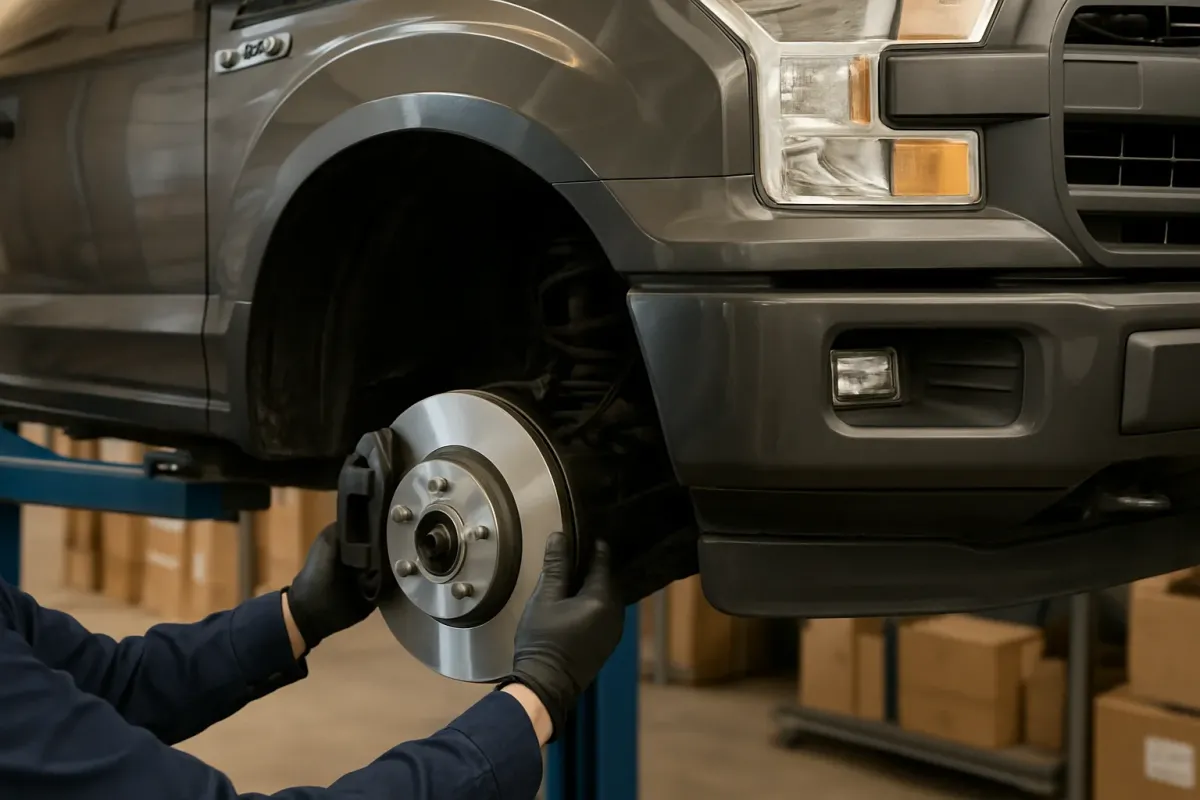
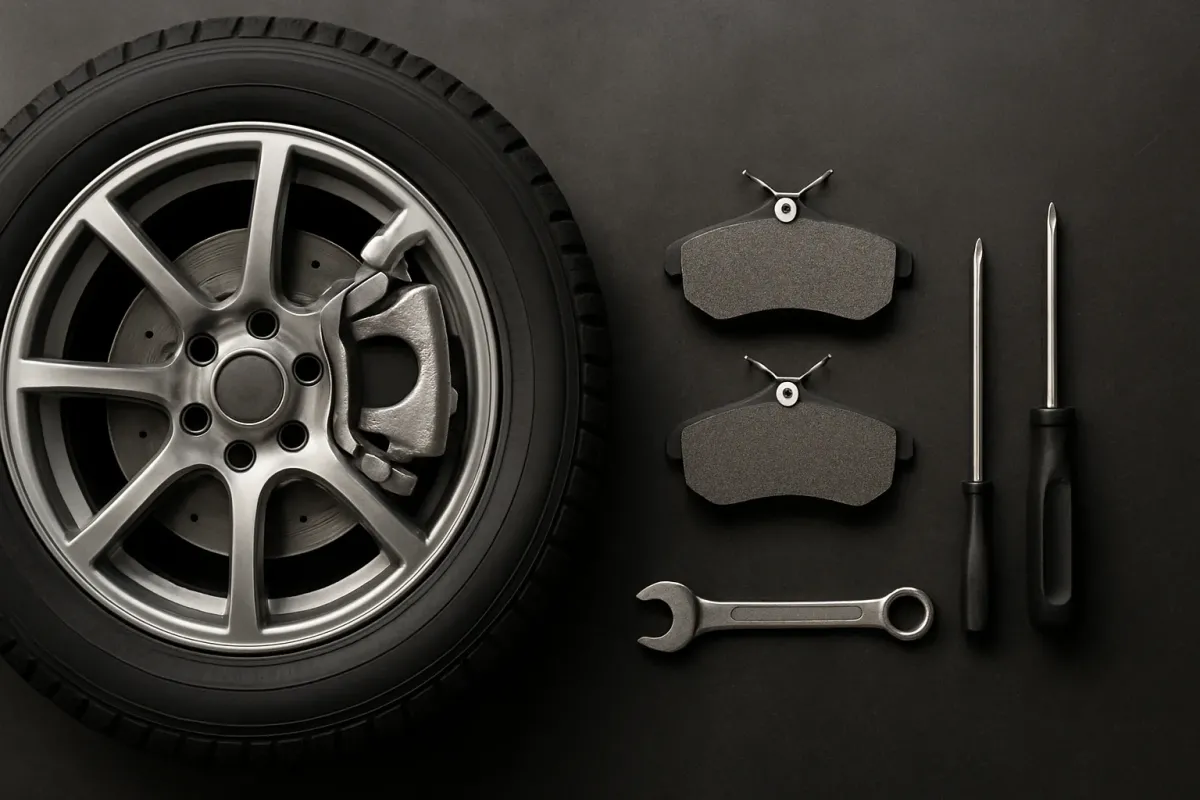
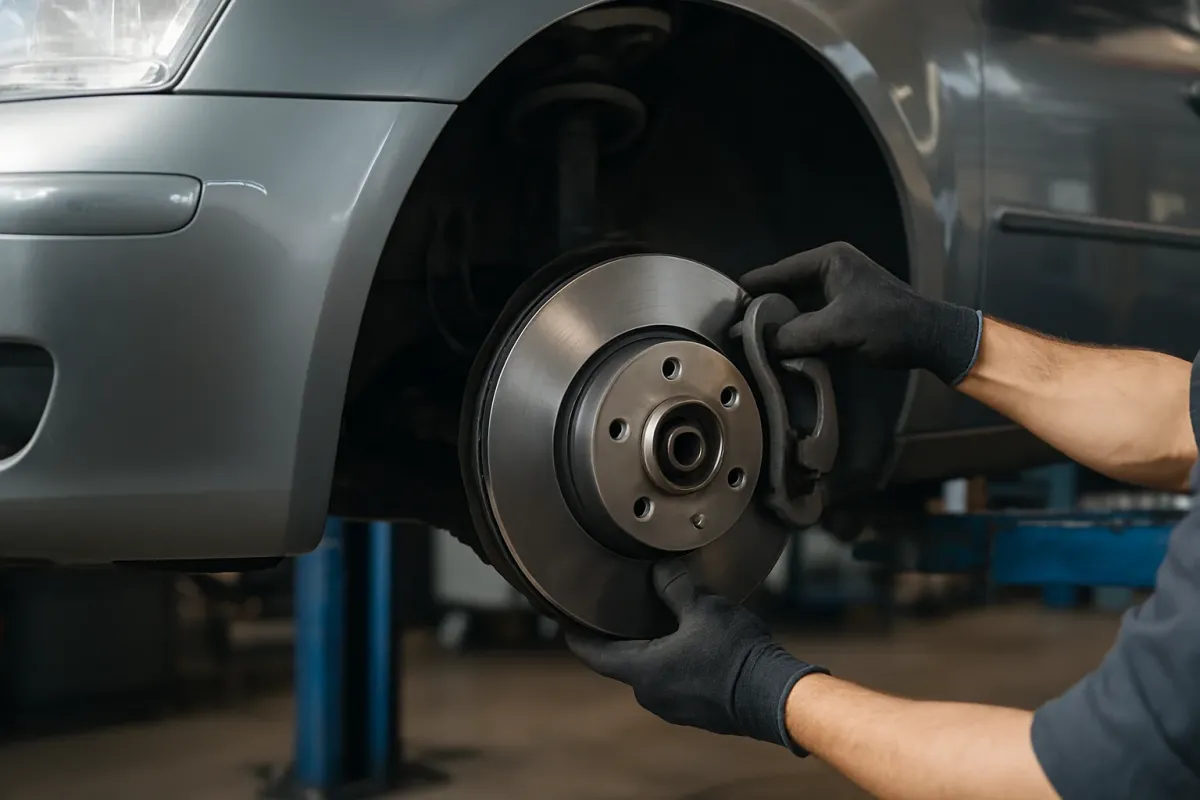
Brakes & Brake Parts for Ford Mustang: Selection and Installation
How to choose the right brakes and brake parts for a Ford Mustang, check fitment and correctly install rotors and pads.
Overview: Brakes on the Ford Mustang
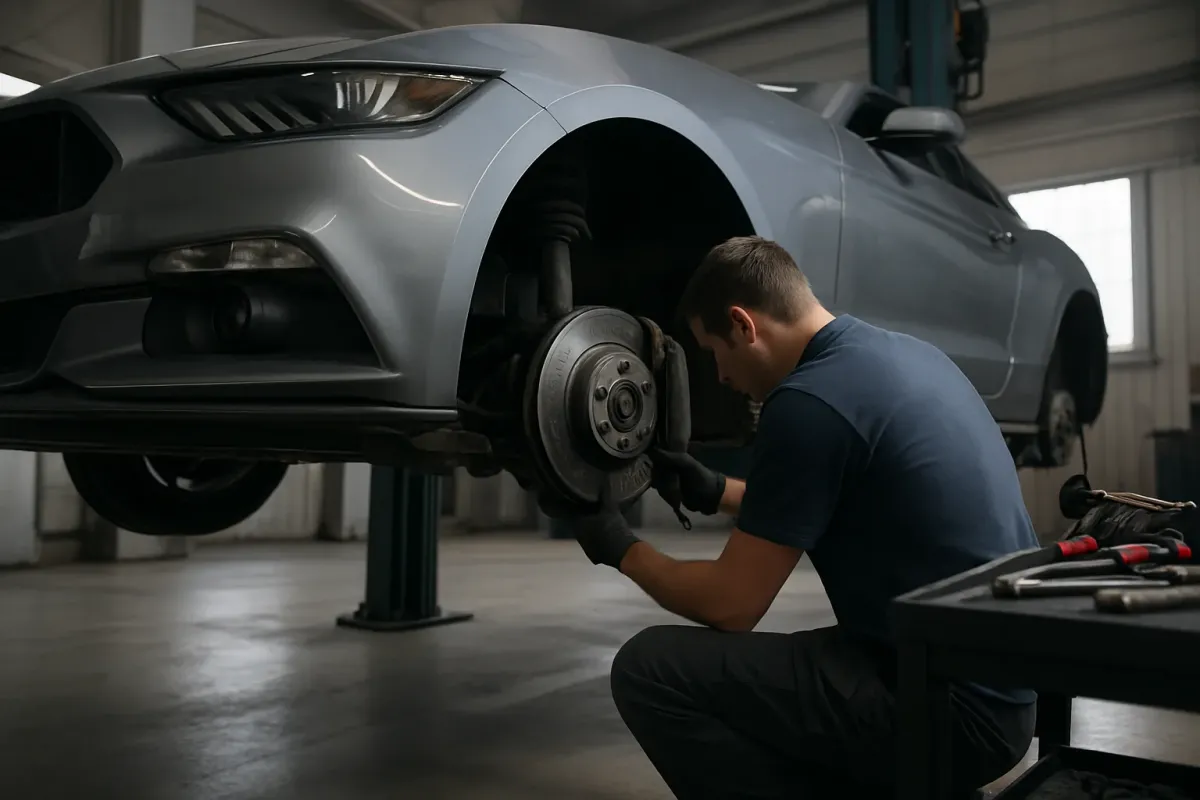
The braking system is one of the most safety-relevant components on the Ford Mustang. Anyone working on their own car should know the main components, carefully check fitment and follow the manufacturer's specifications during installation. This guide focuses exclusively on the Ford Mustang and shows what to look for with brakes and brake parts.
You can find a wide selection of components in the category Bremsen & Bremsenteile. For exact matching, the vehicle registration, year of manufacture and engine specification are always decisive.
Construction of the brake system on the Ford Mustang
Depending on the model year and version of the Ford Mustang, the details of the brake system may differ. In general, the following components are common:
- Brake rotors on the front and usually also on the rear axle
- Brake pads for disc brakes
- Brake calipers (floating or fixed) with brackets
- Brake hoses and lines
- Brake drums and brake shoes (on some rear axles and integrated in parking brakes)
- Master cylinder and brake booster
Which version your Mustang has depends on the model generation, engine and, if applicable, special models with larger brake systems. You can find details in the vehicle documents or by using the vehicle identification number (VIN) together with the parts selection in the shop.
Finding the right brake parts for the Ford Mustang
Relevant information for parts selection
To order the correct brakes, model year and “Ford Mustang” alone are often not enough. Pay special attention to:
- Exact year of manufacture and model generation
- Engine type and power (e.g. different brake systems for lower- and higher-powered variants)
- Front or rear axle (pads and rotors are usually different)
- Rotor diameter and, if applicable, design (vented, solid, drilled, slotted)
In the shop the components are usually sorted by model restriction and rotor diameter. Example: There are separate entries for front and rear brake pads for certain years such as:
- Brake pads / brake linings front for Ford Mustang 1994 - 2004
- Brake pads / brake linings rear for Ford Mustang 1994 - 2004
- Brake pads / brake linings rear for Ford Mustang 2005 - 2014
Before ordering, always check the information against the vehicle registration and, if available, the old rotor or old pads (dimensions, shape, number of locating tabs) .
Assigning rotors correctly
There are different rotor diameters and designs for the Ford Mustang. In the shop this is usually indicated directly in the title. An example is a complete set for the front axle with specific rotor diameters. Such sets can be found, among other places, in the brake complete kits or in the category brake rotors.
You should always:
- compare the specified diameter with the existing rotor
- pay attention to the venting (vented/solid)
- check the number of bolt holes and bolt circle (pitch circle) as well as the center bore
If the brake system was modified at the factory (e.g. performance package, larger caliper), different rotors and pads may be required. In such cases always cross-check by VIN or by the original part number in the vehicle documentation.
Materials and designs: What suits your use?
Brake pads
On the Ford Mustang – depending on the manufacturer – organic, semi-metallic or ceramic compound pads are used. For road use, pads with a balanced compromise between braking performance, noise generation and dust production are generally sensible.
In general:
- Near-production pads: balanced cold bite, suitable for everyday use
- Pads for sporty driving: often more heat-resistant, may have slightly less initial bite when cold and generate more noise
- Low-dust compounds: less brake dust on wheels, sometimes slightly different pedal travel
For the front axle of current Mustang models there are specific pads depending on rotor diameter. Example: Brake pads / brake linings front for Ford Mustang 2015 - 2023 3.7 2.3 compared to variants for larger rotors like Brake pads / brake linings front for Ford Mustang 2015 - 2023 352mm.
Brake rotors
For rotors there are usually the following designs:
- Standard rotors (smooth, possibly internally ventilated)
- Drilled or slotted rotors for improved wet braking behavior and appearance
For the Mustang, sets with drilled rotors are also offered, for example for the rear axle of certain model years. Such kits usually combine rotors and pads and are listed in the category brake complete kits.
Installation of brake rotors and pads on the Ford Mustang
The following notes are general in nature and do not replace the vehicle-specific repair manual. Tightening torques and special features must always be taken from the manufacturer documentation.
Preparation
- Park the vehicle on level ground, engage a gear or select “P” and apply the parking brake (except when working on the rear axle with an integrated parking brake — follow the manufacturer's instructions in that case).
- Loosen the lug nuts slightly, raise the vehicle and safely support it on jack stands.
- Remove the wheel completely.
Removal of the old brake pads
- Turn the steering so that the caliper is easily accessible.
- Release the caliper guide bolts or retaining pins and remove the caliper. Do not hang it on the brake hose; instead support it with wire or a hook on the strut.
- Remove the old brake pads and, if applicable, retaining springs or clips.
- Remove the caliper carrier (bracket) if the rotor is being replaced.
Removal of the rotors
- Release any retaining screws of the rotor.
- Treat any rust build-up on the hub and rotor seat with penetrating oil if necessary.
- Pull off the rotor. If it is stuck, free it evenly from the back with a rubber mallet, without damaging other components.
Cleaning and inspection
- Thoroughly clean the hub face (wire brush, fine abrasive pad if necessary). The mating surface must be flat and clean, otherwise new rotors can run out of true.
- Check the caliper guide pins for smooth operation and lubricate only with brake-approved grease.
- Check brake hoses and caliper for leaks.
- Inspect caliper pistons for corrosion and dust boots for damage.
Installation of the new rotors
- Degrease new rotors with brake cleaner before installation (remove corrosion protection film).
- Set the rotor onto the cleaned hub and align it correctly.
- Tighten any retaining screw(s) to the torque specified in the vehicle documentation.
- If equipment is available, check the lateral runout of the rotor with a dial indicator.
Installation of the new brake pads
- Retract the caliper pistons with an appropriate piston retraction tool. For rear calipers with integrated parking brake, follow manufacturer-specific instructions (sometimes screw/turn mechanism or electronic park brake).
- Install new anti-rattle clips or guide shims if included in the pad kit.
- Fit the new brake pads into the caliper carrier, ensuring correct orientation (inner/outer pad, observe any integrated wear indicators).
- Refit the caliper over the pads and fasten with new or inspected bolts. Torque to values in the workshop manual.
- Check caliper mobility; nothing should bind.
Final work
- Mount the wheel, tighten the lug nuts in a star pattern to the prescribed torque (values from the vehicle documentation).
- Lower the vehicle, depress the brake pedal several times until a firm bite point is present (pistons seat against the new pads).
- Check the brake fluid level in the reservoir and top up if necessary according to the manufacturer's specification.
Brake bedding-in (Bedding-In) for the Ford Mustang
New rotors and pads must bed in so that an even friction layer forms and full braking performance is achieved.
A commonly used procedure for many vehicles (unless the manufacturer specifies otherwise) is:
- Avoid heavy full-stop braking for the first 200–300 km.
- Perform several moderate decelerations from moderate speed, allowing cooling periods in between.
- Avoid holding the vehicle with the brake depressed for an extended time after heavy braking (risk of rotor distortion due to heat buildup).
The exact instructions of the respective pad and rotor manufacturers take precedence and should be taken from the packaging or included documentation.
Other brake parts for the Ford Mustang
Besides rotors and pads, other components can also wear or become damaged:
- Brake calipers & brackets: If pistons are sticking or boots are leaking, replacement may be necessary. Suitable components can be found in the category Bremssättel & -halterungen.
- Brake shoes: If your Mustang uses drum brakes at the rear axle or a drum-type parking brake inside the disc, the friction linings are listed under brake shoes.
- Small parts such as guide pins, bleeder nipples, retaining springs or wear sensors are often listed in the category Miscellaneous.
Especially for older Ford Mustangs, it is worth checking not only rotors and pads during a major brake service, but also guide pins, rubber boots and flexible brake hoses.
Safety notes
- Work on the brake system requires care and the correct tools. If in doubt, the work should be checked or carried out entirely by a professional workshop.
- After any brake work, a functional check and a cautious test drive are mandatory. Observe braking distance, noises and any pulling to one side.
- Always consult official Ford documentation or a professionally recognized repair manual for tightening torques, brake fluid specifications and special procedures (e.g. with electronic parking brake).
Frequently asked questions
How do I find out which rotor size my Ford Mustang has?
Measure the diameter of the installed rotor or compare by VIN and equipment with the information in the shop. Year of manufacture alone is not sufficient, as there are often multiple rotor sizes per generation.
Do I always have to replace rotors and pads together on the Ford Mustang?
Technically, pad replacement without rotor replacement is possible if the rotors are still within the wear limit and are not cracked or heavily worn. In practice, simultaneous replacement is recommended for significantly worn or borderline rotors to achieve optimal braking performance.
May I fit different brake parts left and right?
No. On an axle, identical rotors and pads must always be used, i.e. replace in pairs left and right. Different wear states or compound mixes on one axle can lead to uneven braking behavior and increased stopping distances.