Brakes & Brake Parts for Dodge Durango: Selection and Installation
What is important when selecting, fitting and installing brakes on the Dodge Durango – from discs and pads to the brake hydraulics.
Overview: Brakes on the Dodge Durango
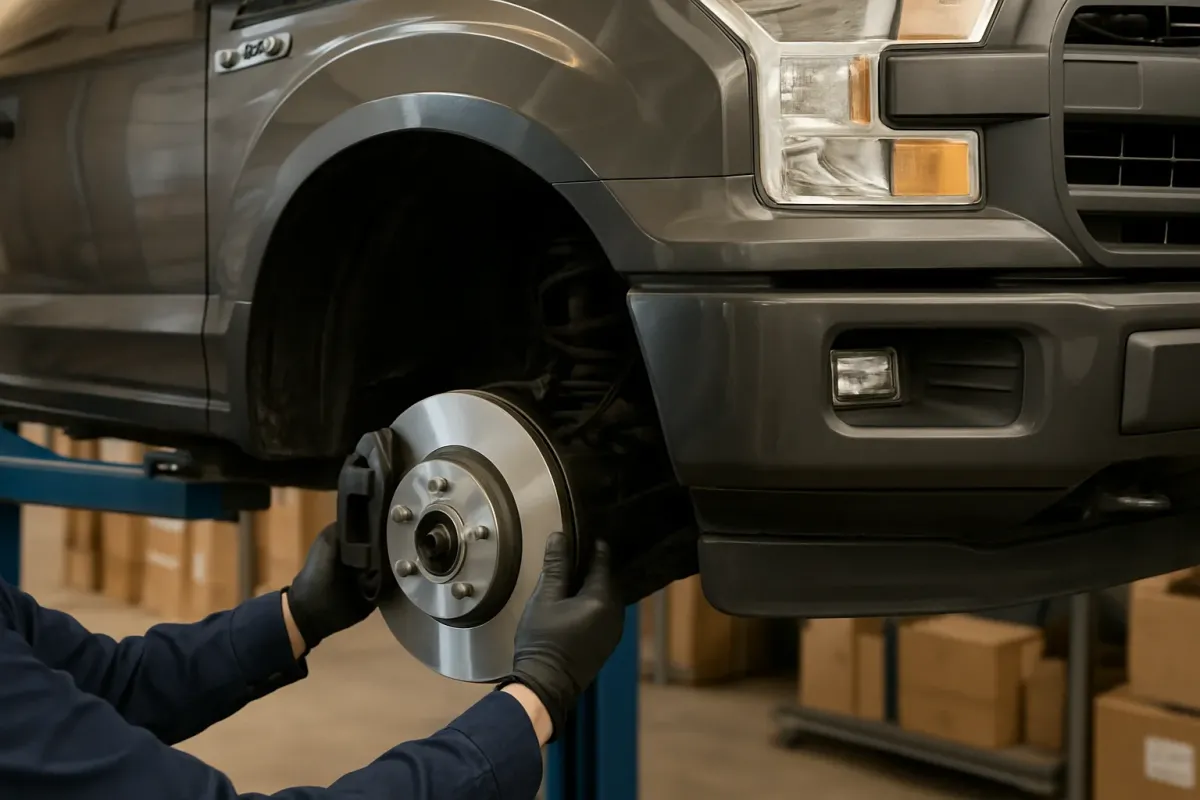
The braking system on the Dodge Durango is a safety-critical system that should be inspected regularly and overhauled as needed. If you work on your own vehicle, you can perform many jobs on discs, pads and calipers yourself – provided the correct parts are selected and installed professionally.
This guide is exclusively about the Dodge Durango. Model years, engine variants and brake configurations can vary by model. Therefore always check the information in your vehicle documents (e.g. registration document) and use the vehicle-specific selection in the shop before ordering brake parts.
Layout of the brake system on the Dodge Durango
Depending on the model, the Dodge Durango is equipped with a combination of disc brakes on the front and rear axles, sometimes in conjunction with a separate parking brake with brake shoes in the rear hub. The basic components are:
- Brake discs on the front and rear axles
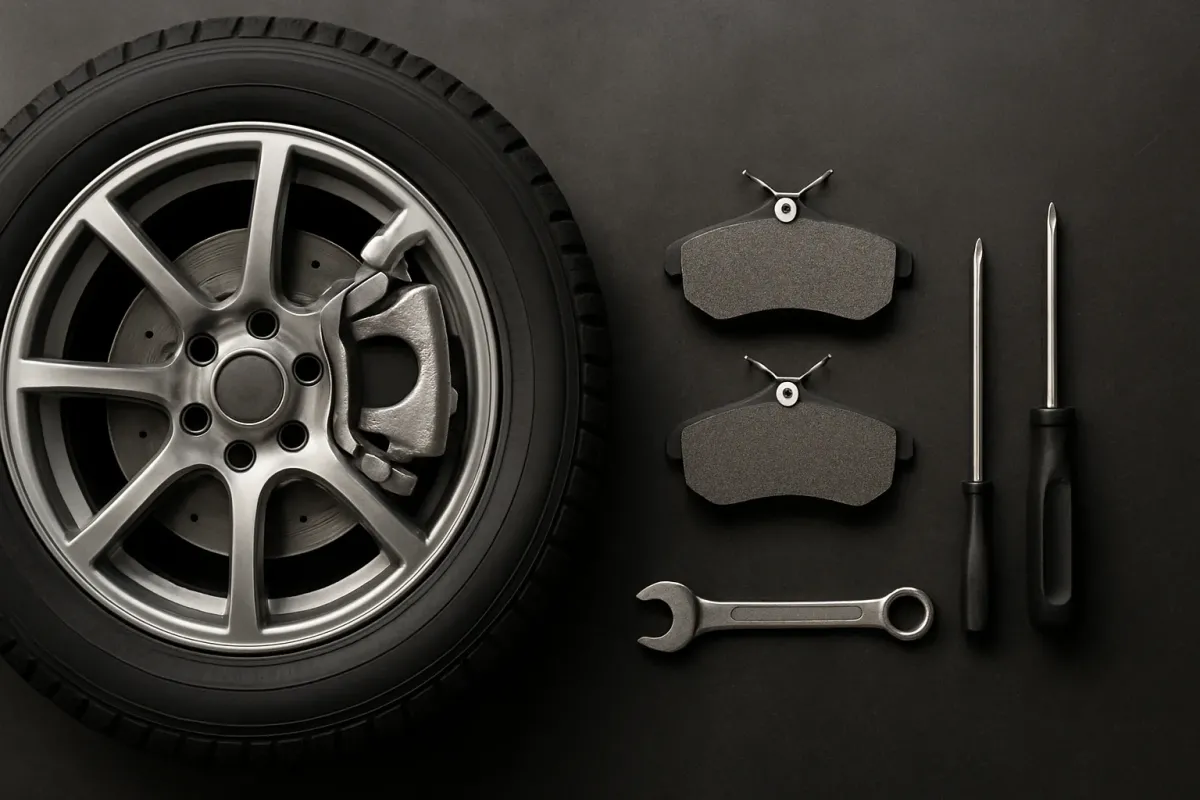
- Brake pads matching the respective calipers
- Brake calipers and brackets (fixed caliper or floating caliper, depending on the version)
- Brake shoes for the parking brake (if a drum-in-disc parking brake is installed)
- Hydraulic system with master cylinder, brake lines and hoses
- ABS/ESP sensors which can be affected when working on the hub and wheel bearing
A wide selection of Brakes & Brake Parts for US vehicles can be found in the corresponding category. Always pay attention to the exact allocation for the Dodge Durango.
Choosing the right brake discs for the Dodge Durango
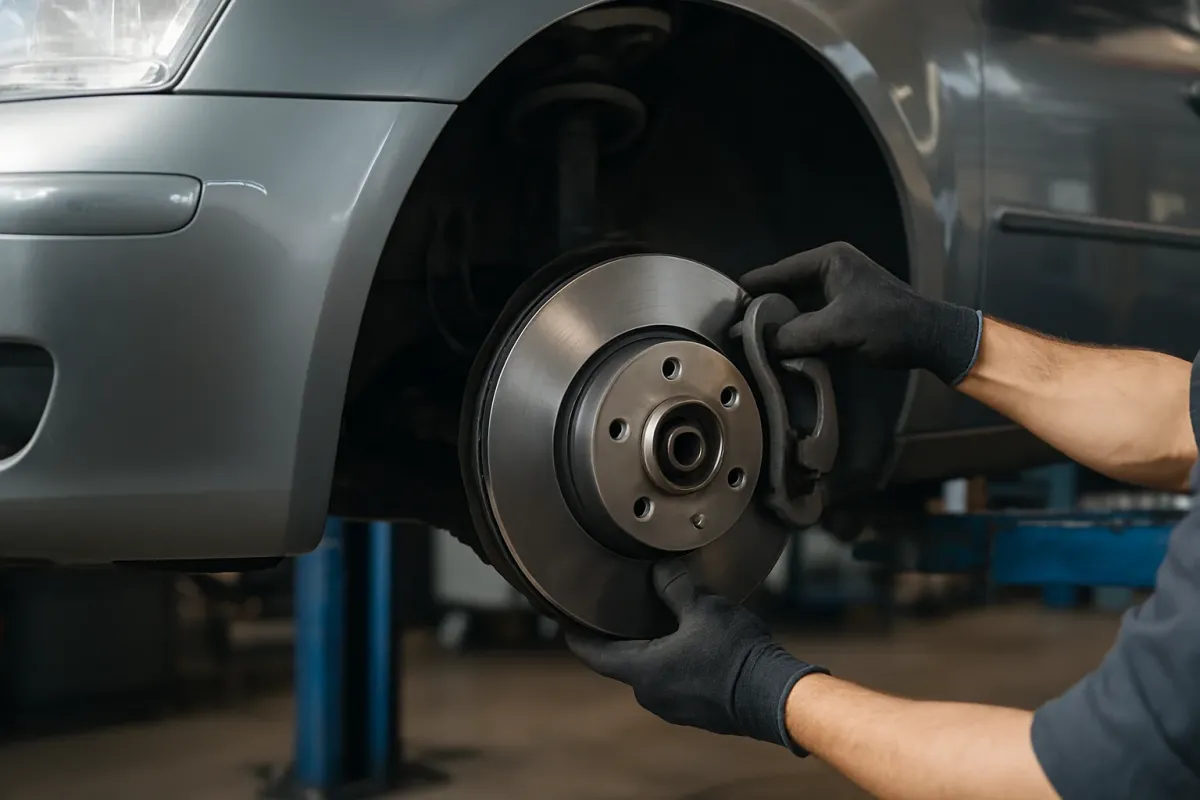
Brake discs differ by diameter, thickness, design (solid, internally ventilated, possibly drilled/slotted) and bolt pattern. Depending on model year and equipment variant, different dimensions and brake systems are used on the Dodge Durango.
Important criteria for brake discs
- Diameter and thickness: Must match exactly the originally installed system. Deviations can lead to installation problems or safety risks.
- Ventilation: Internally ventilated discs are standard at the front axle and often also at the rear axle.
- Mounting and bolt pattern: Number of wheel bolts and bolt pattern must match, otherwise installation is not possible.
- With or without hub/wheel bearing: Some variants combine disc and wheel hub; check what was fitted from the factory.
For brake discs you will find a separate category under Brake discs. Use the vehicle selection there for your Dodge Durango and compare the technical data with the information in the registration document or the workshop manual.
Brake pads for the Dodge Durango: material and selection
Brake pads must match the disc, the caliper and the braking characteristics of the Dodge Durango. Incorrect pads can cause noise, uneven wear or reduced braking performance.
Pad types and differences
- Organic/NAO pads: Generally quieter, often somewhat softer, but higher wear.
- Semi-metallic pads: Good compromise between braking performance and durability, commonly used in everyday driving.
- Ceramic pads: Cleaner wheel appearance due to less brake dust, often quieter braking behavior. Check approvals for your Durango.
It is important to use the correct pad set for the front and rear axles. For many Dodge Durango models, for example, suitable front pads are available under BRAKE PADS / BRAKE LININGS FRONT FOR DODGE DURANGO JEEP GRAND CHEROKEE 2012 - and rear pads under BRAKE PADS / BRAKE LININGS REAR FOR JEEP GRAND CHEROKEE DODGE DURANGO 2011 -. Always check compatibility with your exact model before ordering.
Notes on selecting brake pads
- Pay attention to specifications for axle side (front/rear) and any special features (e.g. performance package).
- Compare the shape and size of the old pads before final installation.
- Check whether wear sensors are required and whether they are included in the set.
Further pads can be found in the category Brake pads, again with a vehicle selection option for the Dodge Durango.
Brake shoes, calipers and other components
Depending on the version of the Dodge Durango, brake shoes for the parking brake may be fitted at the rear axle, while the service brake runs on discs and pads.
Parking brake shoes
In systems with a “drum-in-disc” design, the brake shoes sit inside the rear brake disc. Typical tasks:
- Replacing worn or glazed brake shoes
- Cleaning the anchor plate and checking the adjuster mechanism
- Adjusting the parking brake travel to the manufacturer's specification
A selection of brake shoes for various US models is available under Brake shoes. When selecting, pay attention exclusively to the Dodge Durango, as shape and width can vary significantly.
Brake calipers & brackets
Faulty or seized calipers are a common cause of uneven brake pad wear and judder. Typical signs:
- Vehicle pulls to one side when braking
- Strongly heated wheel on one side
- Pads on one side are noticeably more worn
When replacing, ensure the caliper exactly matches the specific Durango model. In the category Brake calipers & brackets you will find matching components if you select your vehicle correctly.
Installation notes: Replacing brake discs and pads on the Dodge Durango
The following steps are a general guideline for replacing discs and pads on the Dodge Durango. For exact torque values, special tools and model-specific differences, the workshop manual or the manufacturer's official repair instructions must be consulted.
Preparation and safety
- Park the vehicle on a level surface, engage a gear or select “P”, apply the parking brake (for front axle work).
- Slightly loosen the wheel nuts on the axle to be worked on.
- Lift the vehicle with a suitable jack and support it securely on jack stands.
- Remove the wheels completely.
- Use protective equipment (gloves, safety glasses, dust mask for heavily soiled brakes).
Removing the old brakes
- Locate the caliper guide and mounting. Do not put the brake line under tension.
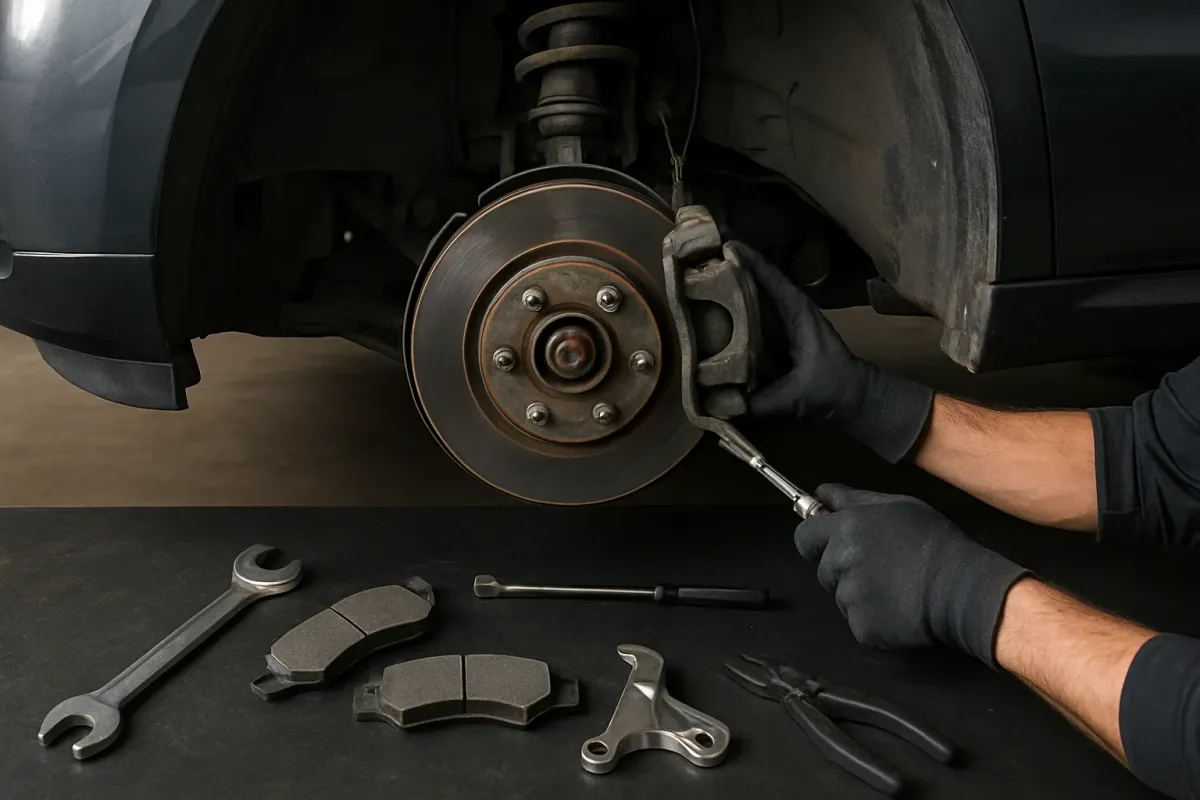
- Unbolt the caliper (guide pins or bolts), carefully remove the caliper and hang it with wire or a hook from the spring or body – never let it hang from the brake hose.
- Remove the old brake pads, check retaining clips and guides for wear and corrosion.
- If present: remove the caliper bracket to access the brake disc.
- Loosen any set screws or retaining screws of the brake disc.
- Remove the old brake disc (if necessary, use penetrating oil and light hammer blows to assist, without damaging other components).
Prepare and install new parts
- Thoroughly clean the wheel hub mounting surface of rust and dirt so the new disc sits flush.
- Degrease the new brake disc (remove protective oil with brake cleaner) and install it.
- If the caliper bracket was removed, install it with new bolts and a suitable threadlocker and tighten to the torque specified by the manufacturer (refer to values in the workshop manual).
- Clean the slide surfaces for the brake pads and the guide pins and, if approved by the manufacturer, lightly lubricate them with a suitable high-temperature paste (do not apply paste to the friction surfaces of the pad or disc).
- Fully retract the caliper piston with a suitable piston retraction tool, paying attention to the brake fluid level in the reservoir (risk of overflow).
- Install the new brake pads with any supplied anti-squeal shims and clips.
- Fit the caliper and tighten to the specified torque (use the values from the vehicle documentation).
After reassembly, fit the wheel and initially tighten the wheel nuts by hand. After lowering the vehicle, tighten the wheel nuts across the wheel in a star pattern to the torque specified in the vehicle documents.
Finishing work and test drive
- Before driving, depress the brake pedal several times until a firm pressure point is present (pistons seat against the pads).
- Check the brake fluid level and correct if necessary according to the manufacturer's instructions.
- Carry out a cautious test drive, check braking behavior and any noises.
- Bed in new brakes: perform several gentle stops from moderate speed; avoid full-force stops in the first kilometers unless the manufacturer's instructions state otherwise.
Complete brake kits and other parts
If you want to overhaul the entire brake system on one axle of the Dodge Durango, you can use complete brake kits that include discs, pads and possibly other installation material. Such kits are clearly listed in the category Complete brake kits. It is also important here to accurately specify the Durango using the vehicle selection.
Other components such as brake lines, wear sensors, retaining springs or mounting accessories can be found in the category Other. These small parts are often underestimated but are crucial for long-term reliable brake function.
Typical mistakes when changing brakes on the Dodge Durango
- Wrong parts ordered: Always match the VIN, model year and engine and use the shop's vehicle selection.
- Insufficient cleaning: Rust on hubs or slide surfaces can cause disc runout and uneven pad wear.
- Missing torque specifications: Torque values must not be estimated. Always use the official values from the workshop manual or manufacturer documentation.
- No piston retraction: Caliper pistons must be fully and evenly retracted, otherwise the new pads may bind.
- No bedding-in: If the pad-disc mating is not bedded in according to recommendations, it can lead to scoring, judder or reduced braking performance.
Frequently Asked Questions
How do I find the right brake parts for my Dodge Durango?
Use the vehicle selection in the shop and match data such as model year, engine and any PR / equipment codes with your vehicle documents and the workshop manual. Order only parts that are explicitly approved for your Dodge Durango.
What tightening torques apply to calipers and wheel nuts?
Specific torque values depend on model and year. Use exclusively the values from the official Dodge repair manual or the workshop-specific data program and adhere to them exactly.
Do I always have to replace discs and pads together on the Dodge Durango?
It is recommended to fit new pads when changing heavily worn or scored brake discs. Whether a combined replacement is necessary in your case depends on the wear condition. Check disc thickness, scoring and pad thickness according to the manufacturer's specifications.