Bodywork, add-on parts & accessories for Ford Mustang
How to correctly select, check fitment and professionally install bodywork, add-on parts and accessories for your Ford Mustang.
Basics: Bodywork and add-on parts on the Ford Mustang
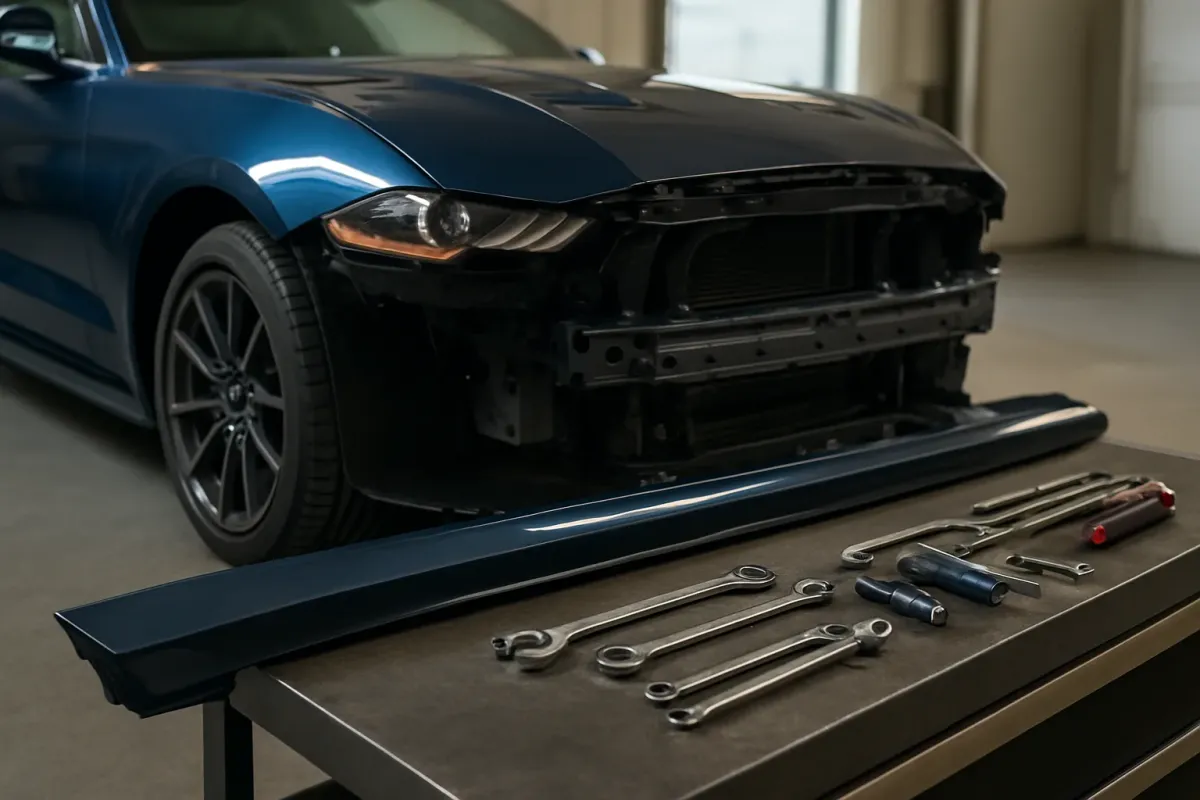
The Ford Mustang offers many options to visually and functionally customize bodywork, add-on parts and accessories. For successful installation and clean fitment, careful selection, precise fitment checks and correct fastening are essential.
In the area Bodywork, add-on parts & accessories you will find, among other things, bumpers, diffusers, side skirts, spoilers, hoods, front grilles and add-on parts for the Ford Mustang. Installation can be carried out with standard home mechanic equipment, provided you proceed in a structured way and inform yourself in advance.
Vehicle-specific selection: What to watch for on the Mustang
On the Ford Mustang, details of bodywork, mounting points and bumper geometry change depending on model, production period, trim and engine variant. Therefore the exact allocation of the part to the vehicle is important.
Important points when selecting parts
- Vehicle identification: Always refer to the information in the vehicle documents and the selection options in the shop (year of manufacture, model, where applicable special variants such as performance packages).
- Observe compatibility information: Many parts are limited to certain model years, for example diffusers and side skirts for defined periods.
- Variant of rear and front section: Shape of the bumpers, position of reflectors and exhaust tailpipes differs by configuration, which directly affects the fitment of diffusers, spoilers and side skirts.
- Material and finish: Whether unpainted, primed, in visible carbon look or glossy black – consider whether it should be painted or if an add-on part will be mounted “out of the box.”
- Certificates/TÜV notes: For parts marked “TÜV” always check which documents are supplied with the product and how installation must be carried out according to the report.
Examples of vehicle-specific products are rear diffusers with integrated exhaust tips or side skirts with a defined Mustang model-year range. Products such as the rear diffuser with exhaust tips in GT500 style for the Ford Mustang 2018–2023 or the side skirts in GT500 style for the Ford Mustang 2015–2023 are each designed only for clearly defined periods.
Bumpers, diffusers and front/radiator grilles
Bumpers and diffusers significantly shape the look of the Ford Mustang. As these components can be involved in the crash system and aerodynamics, installation should be carried out particularly carefully.
Bumpers and bumper reinforcements
In the category Bumpers & reinforcements you will find parts for the front and rear area. When replacing the bumper the following points are relevant:
- Locate fastening points and clips beforehand (undercarriage, wheel arch liners, upper edge at the front mask or rear valance).
- Mark and disconnect plug connectors for parking sensors, fog lights or reversing lights with no voltage present.
- Bumper reinforcements and energy absorbers must only be mounted according to manufacturer specifications; no homemade constructions.
- Pay attention to correct panel gaps to the hood, fenders and trunk lid.
Rear diffuser with exhaust tips
When retrofitting a diffuser with integrated tips (e.g. GT350 or GT500 style) the interface to the exhaust system is crucial. Products like the rear diffuser in GT350 style for the Mustang 2015–2017 and the diffuser for the Mustang 2018–2023 in GT500 style are each matched to the factory-installed tailpipe position and bumper geometry.
Typical installation steps:
- Remove the original diffuser according to vehicle documentation and workshop instructions (clips, screws, where applicable retaining tabs).
- Temporarily fit the new diffuser and check all fastening points before finally installing clips or screws.
- Ensure that the exhaust tailpipes sit stress-free and centered in the cutouts, without contact with the valance.
- After installation check clearances with the exhaust warm and cold.
Please refer to the Ford workshop documents or the technical documentation for your Mustang for specific torque settings for threaded connections.
Front and radiator grilles
Front grilles change the appearance of the vehicle front and can affect the cooling airflow. In the category Front & radiator grilles you will find suitable solutions for different Mustang variants.
When mounting note:
- Sensor components (radar, parking sensors, temperature sensors) must not be covered or displaced unless this is expressly permitted.
- The grille must snap into the bumper securely or be fastened with screws; loose fixings lead to vibrations and noises.
- If air guides are removed during removal, check whether they must be reused with the new grille.
Side skirts, spoilers and rear wings
Side skirts and rear spoilers influence both the look and the airflow around the Ford Mustang. Especially for parts with a TÜV note, compliant installation is mandatory.
Side skirts
In the category Side skirts as well as in specific products like the side skirts in GT350 style for the Ford Mustang 2015–2023 or the side skirts in Dark Horse style for Mustang models from 2024 you will find vehicle-specifically shaped parts.
Installation notes:
- Thoroughly clean and degrease the lower edge of the skirts before using adhesive tapes or sealants.
- If drilling is required, check in the report or installation instructions in advance at which points this is permitted.
- Park the vehicle on level ground before marking drill holes so that panel gaps and alignment are correct.
- After installation apply corrosion protection to drilled holes.
Rear spoilers and Gurney flap
Rear spoilers on the Mustang are either bolted to the trunk lid or mounted with adhesive or combined fastenings. Spoilers like the GT-Performance-style rear spoiler or the spoiler with Gurney flap in GT500 style are designed for certain Mustang model years and trunk lid shapes, for example the rear spoiler with Gurney flap in GT500 style for Ford Mustang 2015–2023.
Typical work steps:
- Remove existing spoiler or cover caps, carefully remove adhesive residues (plastic wedges, suitable adhesive remover).
- Use drill templates or markings from the installation instructions exactly as specified; deviations can lead to stresses and leaks.
- Seal drill holes and, if necessary, apply rust protection before the spoiler is finally bolted on.
- Position sealing elements and any supplied adhesive tapes according to the instructions to prevent water ingress.
For spoilers with TÜV documentation the installation method, screw quality and number are usually specified. Adhere strictly to these specifications and, if necessary, have the approval recorded at an inspection center.
Hoods, fenders and side panels
Hoods, fenders and side panels affect both the appearance and structure of the Ford Mustang. Replacement should be carried out carefully, especially if airbag sensors or crash structures are located nearby.
Hoods
In the category Hoods you will find different designs. When changing them note the following points:
- Secure gas struts or hood supports to prevent sudden closing.
- Mark hood hinges so that the position can be more easily restored.
- Check and readjust the panel gap to fenders and front bumper several times.
- Check the latch for correct engagement; the hood must not move during driving.
Specific torque settings for hinge bolts and hood latch should be taken from Ford specifications for the respective Mustang model.
Fenders, side panels and fuel filler cap
Parts such as fenders, side panels and fuel filler caps can be found in the category Fenders, side panels & fuel filler cap. Here fitment and corrosion protection are particularly important.
- Align fenders on the vehicle before painting to allow for any adjustments.
- Carefully release wheel arch liners and fastening clips to avoid breakage.
- For the fuel filler cap ensure the filler neck sits stress-free and the flap closes cleanly.
- After installation conserve cavities with suitable wax.
Accessories and visual enhancements
In addition to large body parts there are also visual enhancements, for example covers for windows or smaller add-on parts.
An example is the cover/louvre for the rear window of the Ford Mustang. Such parts are usually mounted with adhesive pads or mounting brackets. Important is:
- Thoroughly clean and degrease the glass before applying adhesive surfaces.
- Perform mounting only at appropriate temperatures (observe manufacturer specifications for the adhesive).
- The rear view must not be unduly restricted; observe legal requirements.
General tips for installation on the Ford Mustang
Regardless of whether you are retrofitting a diffuser, side skirts, spoiler or other body parts on the Ford Mustang:
- Have documents ready: Read original vehicle documentation, installation instructions and, if applicable, TÜV reports before starting work.
- Prepare tools: Socket set, plastic wedges, torque wrench, drill (if necessary) and corrosion protection products.
- Do a trial fit: Initially fit the part loosely, check panel gaps, then finally fasten.
- Do not use force: If a part does not fit, check whether the correct model was ordered; do not “make it fit” with rough modifications.
- Electrical components: For work on bumpers or taillights disconnect the battery according to manufacturer instructions to avoid error messages or short circuits.
If torque settings, fill quantities or other vehicle-specific values are required, these should always be taken from the Ford workshop documents or a reliable technical manual for the respective Mustang model.
Frequently Asked Questions
How do I find out whether a body part fits my Ford Mustang?
Compare the information in the shop (model, production period, variant) with the data in your vehicle documents. Pay special attention to notes on specific model years or special variants and use the vehicle-specific selection in the shop.
Do I need approval for spoilers and side skirts on my Mustang?
That depends on the specific part and national regulations. For parts with a TÜV note, reports or documents are usually included. Check these carefully and clarify with an inspection center if in doubt whether registration is required.
Can I install bumper, diffuser and side skirts on the Mustang myself?
With basic mechanic experience, appropriate tools and careful work this is possible. Follow the installation instructions, use the Ford vehicle documentation for details such as torque settings and work without time pressure to avoid damage.