Oil change kits for Chevrolet Express 1500 Standard Passenger
What to watch for when choosing an oil change kit for the Chevrolet Express 1500 Standard Passenger – from selection and fitment to practical installation.
Basics: Oil change kit for the Chevrolet Express 1500 Standard Passenger
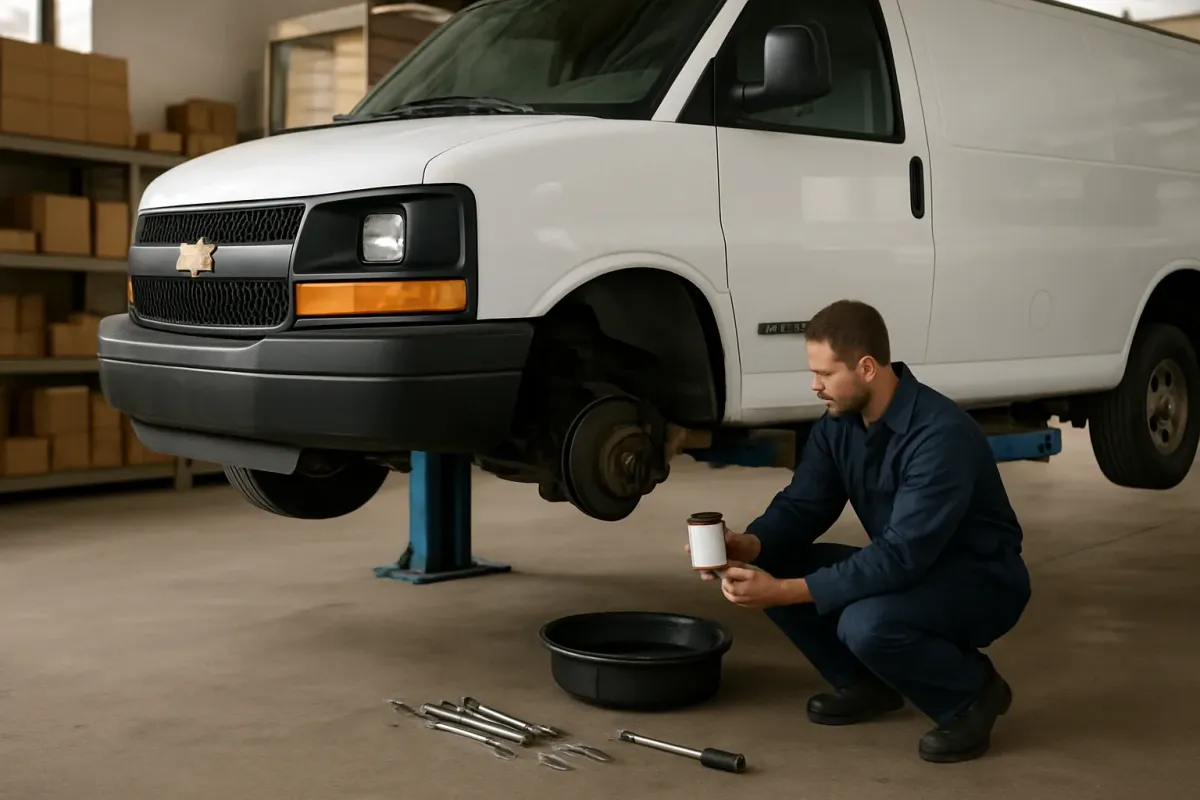
For the Chevrolet Express 1500 Standard Passenger, regular oil changes are crucial for mileage and reliability. A suitable oil change kit makes the job easier because engine oil and oil filter are matched and you don't have to hunt down every component separately.
Because the Chevrolet Express 1500 Standard Passenger is available with different engine variants and equipment levels, selecting the exact kit is particularly important. Oil quantity, viscosity and filter type can vary depending on engine code and year of manufacture. Therefore you must always check all information on fill quantities and approvals in the vehicle documents, the owner's manual or via the vehicle search in the shop.
What an oil change kit should contain
A sensible oil change kit for the Chevrolet Express 1500 Standard Passenger covers all parts you usually replace during an oil change. Common items are:
- Engine oil in the correct viscosity (e.g. 5W-30, exact specification according to vehicle documentation)
- Oil filter in the correct design and with the correct thread/sealing ring
- Drain plug washer (copper or aluminum crush washer, depending on the configuration)
Some kits additionally contain:
- Disposable gloves
- Cleaning wipes
- Notes on service intervals
However, the decisive factors are always the correct oil quality and a suitable filter. If you are unsure whether a particular filter type fits your Express 1500, compare the shop information with your vehicle identification number (VIN) and the entries in the vehicle documentation.
Choosing viscosity and oil specifications correctly
Many US petrol engines in this vehicle class are typically operated with a multi-grade oil of viscosity 5W-30. Nevertheless: never rely solely on experience or information for other models; always check:
- Viscosity grade (e.g. 5W-30, 10W-30 – see the manual)
- Manufacturer approvals or specifications (e.g. GM specifications according to the owner's manual)
- Fill quantity including oil filter change
Using the wrong oil can lead to inadequate lubrication, increased wear or oil consumption. Therefore, follow the specifications for your Chevrolet Express 1500 Standard Passenger consistently.
An overview of available oil change kits can be found in the category Oil change kits. There you should narrow down your vehicle type using the filters or vehicle search before ordering.
Oil filter fit: what to watch for
The fit of the oil filter is particularly critical. Problems often arise when filters are chosen only by "approximately matching" engine size or by other Chevrolet/GMC models. That a filter fits a Silverado or a Savana, for example, does not automatically mean it is suitable for your Express 1500.
In the shop you will find various oil change kits that indicate, by referencing other GM vehicles, which engine sizes and filter types are generally used. Examples:
- Oil change kit AMSOIL 5W-30 (6.6 L) + oil filter PF46E – GMC Savana, Sierra, Yukon 4.8 V8
- Oil change kit AMSOIL 5W-30 (4.7 L) + oil filter X111 – GMC Jimmy, Safari, Savana, Sierra, Sonoma 4.3 V6
These examples show which oil and filter combinations are common in similar GM vans and pickups. Do not transfer this blindly to your Chevrolet Express 1500 Standard Passenger. The decisive factors are:
- Compare the engine code with your vehicle documentation
- Check the compatibility list of the kit against your exact vehicle type
- If necessary, compare filter dimensions and designation with the currently installed filter
Preparation: tools and materials for the oil change
For the oil change on the Chevrolet Express 1500 Standard Passenger you typically need:
- Suitable oil change kit (engine oil, oil filter, drain plug washer)
- Vehicle lift, pit or sturdy ramps
- Oil drain pan with sufficient capacity
- Socket or box wrench for the drain plug (size depends on the vehicle)
- Oil filter wrench (strap wrench, cap wrench or similar)
- Funnel
- Brake cleaner or similar to clean oil residues
- Rags or shop towels
- Protective gloves
The wrench size of the drain plug and the tightening torque vary depending on engine and configuration. Be sure to consult the technical data for your vehicle or the workshop manual. Do not tighten by "feel" to avoid damaging the oil pan threads.
Oil change on the Chevrolet Express 1500 Standard Passenger: step by step
1. Secure the vehicle and warm up the engine
Park the Chevrolet Express 1500 Standard Passenger on level ground, secure it against rolling (engage a gear or "P" for automatics, apply the parking brake) and let the engine run briefly until the oil is warm to the touch. This makes it less viscous and it drains better.
2. Remove undertray/splash shield (if present)
Many Express models have an undertray or splash shield in the area of the oil pan. Remove the corresponding screws or clips and set the shield aside. Be careful not to lose any fasteners.
3. Drain the used oil
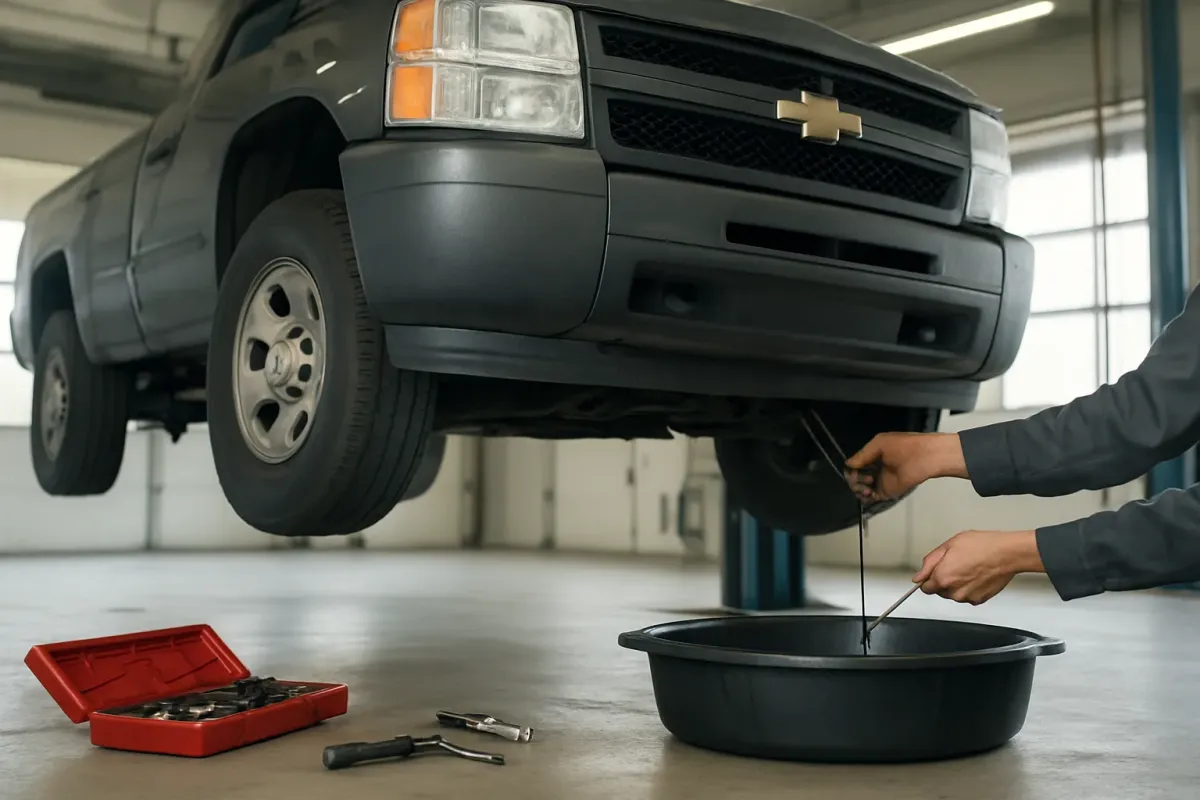
Position the oil drain pan under the drain plug. Loosen the plug carefully, hold it and fully unscrew it. The oil will now flow out in a stream – wear appropriate protective clothing.
Allow the oil to drain completely. This can take several minutes. During this time, check the sealing surface of the drain plug and the oil pan for damage or metal shavings.
4. Remove the oil filter
Position the drain pan so that the oil coming from the filter is also captured. Loosen the oil filter with the oil filter wrench. Once it turns easily, finish unscrewing it by hand. Make sure the old gasket does not remain stuck to the mating surface on the engine block.
Clean the mating surface on the engine block with a lint-free cloth and some cleaner. It must be clean and dry before the new filter is installed.
5. Install new sealing rings and drain plug
Replace the drain plug washer with the new ring from your oil change kit (if included). Screw the drain plug in by hand and then tighten it with a torque wrench to the torque specified in the workshop manual. Do not overtighten.
6. Install the new oil filter
Moisten the rubber seal of the new oil filter with a little fresh engine oil. Screw the filter on by hand until the seal contacts the surface, then tighten it further according to the manufacturer's instructions (usually about 3/4 turn). Specific instructions can be found in the filter's installation guide or in the vehicle documentation.
7. Add engine oil
Open the oil filler cap in the engine bay and, using a funnel, pour in the amount of oil specified in the owner's manual – initially a little less than the maximum fill to allow fine adjustment of the level. Close the cap.
Now start the engine and let it run briefly at idle. Check that the drain plug and oil filter are leak-free. Turn off the engine, wait a few minutes for the oil to run back into the oil pan, and then check the level with the dipstick. Add oil if necessary until the level is in the recommended range.
8. Reinstall undertray and test drive
Reinstall the undertray and correctly tighten all fasteners. Then perform a short test drive and afterward recheck the oil level as well as the area around the oil filter and drain plug for leaks.
Maintenance intervals and specifics for the Express 1500
The change intervals for the Chevrolet Express 1500 Standard Passenger depend on engine variant, year of manufacture and operating conditions (short trips, towing, high load, etc.). The owner's manual lists the regular and, if applicable, the "severe duty" intervals. Always follow those specifications.
Some vehicles have an oil change or service indicator. If your Express 1500 Standard Passenger has such a display, observe the reset procedure described in the manual after the oil change.
Dispose of used oil and filters in an environmentally responsible way
Used oil and used oil filters do not belong in household waste or the environment. Collect the oil in a suitable container and hand it in together with the used filter at a recycling center or an appropriate collection point. Many retailers accept back the equivalent amount of used oil free of charge when oil was purchased from them.
Typical mistakes when changing the oil on the Chevrolet Express 1500
- Wrong oil or wrong viscosity: always follow the specification in the owner's manual.
- Incompatible oil filter: do not decide by "looks similar", but by exact approval.
- Drain plug tightened too much: can damage the threads in the oil pan.
- Old filter gasket remains stuck: almost always leads to leaks.
- Wrong oil quantity: too much or too little oil can cause engine damage – always check the level.
Frequently asked questions
Which oil is right for my Chevrolet Express 1500 Standard Passenger?
The correct viscosity and specification are listed in the owner's manual and vehicle documents. Use only oil that meets these requirements, and choose an oil change kit based on your vehicle's exact engine variant.
How do I find a suitable oil change kit in the shop?
Go to the category Oil change kits and filter by make, model and engine. Then compare the compatibility information with the data in your vehicle documents (e.g. engine code, year). When in doubt, always use the VIN and consult support.
Can I use the oil change kit if other GM models are listed?
That a kit is approved for similar GM vehicles does not automatically mean it fits the Chevrolet Express 1500 Standard Passenger. Always check the kit's compatibility list and compare it with your VIN, engine variant and the information in the owner's manual before using it.