Selecting wheel bearings, wheel hubs & bushings correctly for US cars
US car wheel bearings and hubs: what to check before buying. Compare vehicle fitment, kit contents and relevant products.
Function of wheel bearings, wheel hubs and bushings on the US vehicle
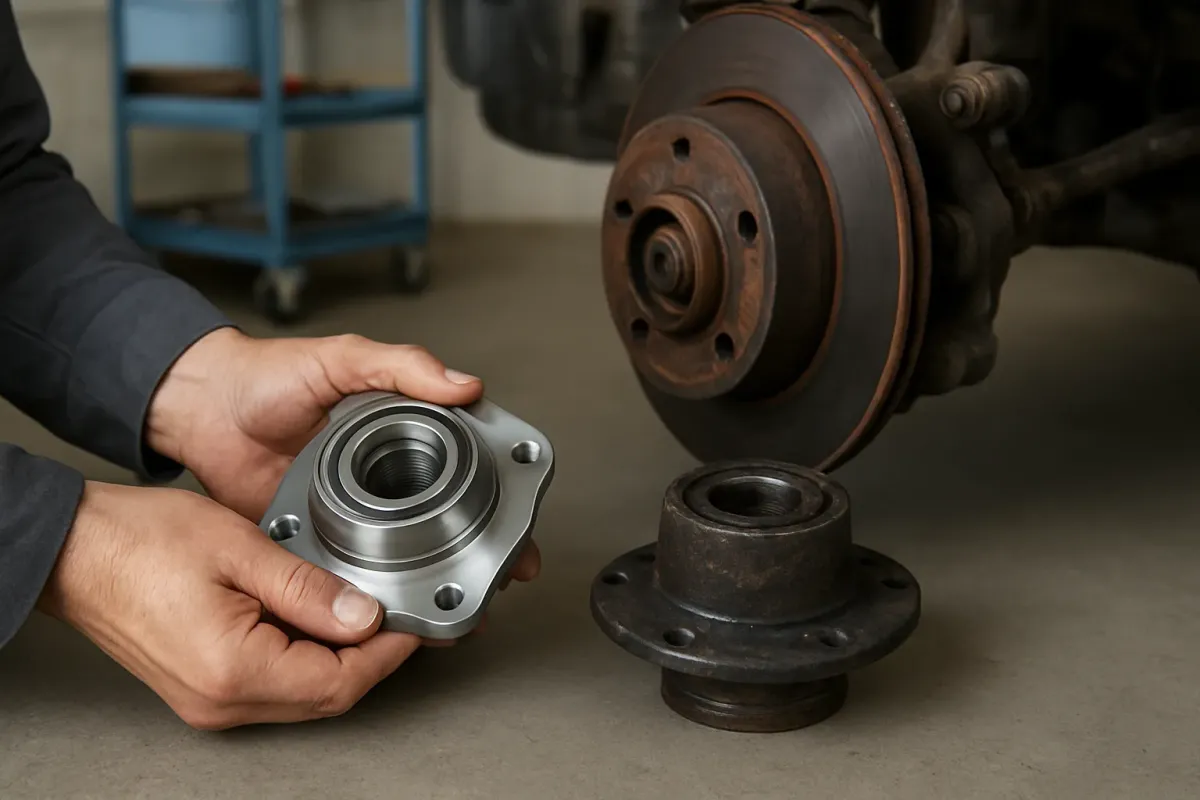
Wheel bearings, wheel hubs and bushings are among the wear-intensive parts of US‑car suspensions. They directly affect driving safety, steering precision and noise comfort. Especially on older pickups, SUVs and sedans from the USA, these components often need attention before the engine or transmission show problems.
Wheel bearings carry the vehicle weight and allow the wheels to rotate with as little friction as possible. Wheel hubs connect the bearing, brake disc or drum and wheel to each other and often carry ABS sensors as well. Bushings (rubber mounts) decouple suspension parts such as control arms or anti‑roll bars from the vehicle frame or body and prevent rattling or knocking.
Types of wheel bearings and hubs on US cars
US vehicles use different bearing and hub concepts depending on the year and vehicle class. Basically you can distinguish three groups:
- Classic tapered roller bearings (mostly on older pickups/SUVs and solid rear axles)
- Unit bearings for disc brakes with drive shafts or stub axles
- Hubs with integrated bearing and ABS sensor (most common today on front axles)
On modern US vehicles whole units are often replaced, for example a front hub with bearing for LINCOLN MKZ / FORD FUSION. That saves time but requires selecting the exact matching unit, since mounting, plug connections and the ABS ring can change even within a few model years.
Typical damage patterns and symptoms
Wheel bearings
- Roaring or grinding noises, speed‑dependent, usually from 40–60 km/h
- Side‑specific noise in cornering (inside or outside noise gets louder)
- Noticeable play at the wheel when you rock it up/down and left/right
- Unusual heating of the wheel after a short drive
On vehicles with integrated hub and bearing, e.g. Chrysler 300 AWD (front hub with bearing), "adjusting" the bearing is not possible. Only a complete replacement helps here.
Wheel hubs
- Clearly perceptible runout or play even though the bearing is new
- Warped flange (signs of impact or accident), resulting in pulsating brakes
- Corrosion on wheel mounting surfaces, wheel does not sit flush
Bushings
- Clunking, knocking or metallic bangs over bumps
- Sloppy steering, wheel alignment cannot be held permanently
- Uneven tyre wear, especially on the inner or outer edges
Selection and fitment: what to watch for
For US vehicles, model and year are often not sufficient for correct parts selection. Always pay attention to:
- Drive: 2WD, 4WD, AWD – 4WD/AWD often use different hubs and bearings
- ABS equipment: with/without ABS, number of ABS sensors (e.g. "4xABS")
- Body variant: Crew Cab, Extended Cab etc. (can affect axles and brakes)
- Engine and brake package: heavy brake packages often use different hubs/bearings
- Axle configuration: solid axle vs. independent suspension, stub axles vs. drive shafts
Examples:
- Dodge RAM 1500 2009–2011 2WD/4WD with ABS – here it is clearly stated that the hub is suitable for both 2WD and 4WD with ABS. Despite the same platform, earlier or later model years may have different variants.
- Chevrolet Blazer / GMC Jimmy 2WD – 2WD and 4WD variants often have different hubs and bearings because the wheel mounting and drive shafts differ.
As a rule, if in doubt use the vehicle identification number (VIN) and check it against the data in parts catalogs. Do not rely solely on appearance or "it'll probably fit".
Preparation: safely support the vehicle
Before you change wheel bearings, hubs or bushings, secure the vehicle:
- Loosen the wheel nuts slightly while the vehicle is on the ground.
- Lift the vehicle with a suitable jack on a level surface.
- Place jack stands at the designated support points.
- Lower the jack slightly so the vehicle sits stably on the stands.
- Remove the wheel completely.
Never work with only the jack and without jack stands. Especially heavy US pickups like a Dodge RAM 1500 or 2500 can develop large forces if they slip.
Installation notes for wheel bearings and hubs
General procedure for hubs with integrated bearing
Many modern US vehicles use complete hub-bearing units, e.g. on the Cadillac Escalade / Chevrolet Avalanche or on Cadillac Deville/Eldorado/Seville. The rough procedure is similar:
- Remove brake caliper and bracket, take off the brake disc (rotor).
- If applicable, remove the dust cap and the central axle nut of the drive shaft.
- Disconnect the ABS sensor plug connectors, carefully unclip the cables from their retainers.
- Loosen the hub mounting bolts from the backside of the steering knuckle.
- Pull the hub off carefully, using penetrating oil and light hammer blows from the rear if necessary.
- Clean the mating surface in the steering knuckle, remove rust and dirt thoroughly.
- Install the new hub with bearing, tighten the bolts to the specified torque.
- Fit the drive axle nut to the prescribed torque and, if required, install a new locking element.
- Reinstall rotor, bracket and caliper, check that everything runs free.
- Reconnect ABS plugs, route the cable so it cannot rub on the tyre or strut.
Always take the exact torque values for bearing bolts, drive axle nuts and wheel nuts from the workshop manual or the technical documentation for your vehicle. Use new self‑locking nuts or stretch bolts (torque‑to‑yield) if specified by the manufacturer.
Particulars for pickups and heavy SUVs
On vehicles like the Dodge RAM 1500 Crew Cab or Dodge RAM 2500 4WD, hubs and bearings are often noticeably larger. Pay particular attention to:
- Weight of the components – ensure secure handling when pulling and installing
- Increased corrosion on the front axle due to off‑road use and road salt
- Sometimes additional retaining rings or cones between hub and knuckle
Plan more time for such jobs, especially if the parts have been in service for many years.
Replacing press‑fit bearings and bushings
Wheel bearings to be pressed in
On many rear axles and older front axles, bearings are still pressed into the knuckle. For these jobs you generally need:
- Hydraulic press or a specialised wheel bearing installation tool
- Appropriate press adapters that only bear on the outer or inner ring
- Cleaner and, if necessary, a fine abrasive pad to clean the bearing seats
When pressing in, make sure you never transmit force through the wrong bearing ring. Otherwise you will damage the bearing before the first drive. For example, if the inner ring later rotates on the drive shaft, something is wrong with the seat or the installation.
Suspension bushings
Bushings are usually pressed into control arms, trailing arms, spring mounts or sway bar mounts. Common mistakes during installation:
- Bushing pressed in crooked and jams
- Rubber mounts are preloaded by tightening the bolt while rotated
- Metal‑on‑metal contact (no cleaning / corrosion protection in the seating area)
Basic rules for bushing replacement:
- Press out or bore out the old bushing completely, remove any remaining sleeve.
- Clean the seating surfaces thoroughly, remove rust, apply a thin layer of suitable assembly grease or lubricant (only if permitted by the manufacturer).
- Press the bushing in squarely and without tilting using a suitable fixture.
- Tighten the bolts at the bearing points typically only with the vehicle under load (in the sprung position) to avoid preloading the rubber.
Checks after installation
After any work on bearings, hubs or bushings you should go through the following points:
- Wheel turns freely, no rubbing or scraping noises
- No noticeable play in the wiggle test (up/down, left/right)
- Brake system correctly installed, brake pressure builds up
- ABS warning light shows normal self‑test when ignition is started and then goes out
- Road test with gentle braking and gradual speed increase, check wheel temperature intermittently
After work on bushings and suspension, a wheel alignment is often advisable. Especially on multi‑link suspensions in sedans or SUVs, even a small change in bushing position can noticeably affect handling and tyre wear.
Sources and part groups
You can find wheel bearings, hubs and bushings for many US models in the corresponding category, for example under Wheel bearings, hubs & bushings. There you will usually find compatible models, drive configurations and model years listed. Always use this information together with your vehicle documents and the VIN.
Common mistakes and how to avoid them
- Wrong torque settings: Over‑ or under‑torqued bearing nuts quickly lead to bearing damage or play. Always torque to the manufacturer's specifications.
- Reusing old fasteners: Stretch bolts or clinched nuts on bearings and hubs should be renewed when specified.
- Contaminated bearing seats: Rust, dirt or burrs in the seat can cause the bearing to sit crooked or to come loose during driving.
- Wrong tools: Improvisation with hammer and chisel damages bearings, hubs and knuckles. If no suitable press tool is available, better postpone the job.
- Damaging the ABS sensor: When handling hubs with integrated ABS sensors, take care with cables and plugs. Pinching or crushing will quickly cause warning lights.
Frequently asked questions
Can I replace wheel bearings and hubs per axle as a rule?
It is often recommended to replace axle‑side parts together when wear and corrosion are clearly visible, especially for hub‑bearing units. It is not always technically mandatory. The condition of the counterpart bearing and the amount of work are decisive. With heavy wear or high mileage it makes sense to renew both sides to avoid double work.
What torque values apply to my wheel bearing or hub?
Torque values are vehicle‑specific and can even depend on the engine, brake or axle package. Do not rely on general tables or empirical values. Always use the values from the workshop manual, the technical documentation or vehicle‑specific repair guides.
How can I tell whether wheel play comes from the bearing or from a ball joint?
When checking wheels with both hands up/down and left/right, play can come from the bearing or from joints. If a second person rocks the wheel while you feel the ball joint or tie‑rod end, you will often feel clear play there. If those components are free of play and the noise/play comes directly from the wheel centre, the wheel bearing is usually the cause. If in doubt, perform a targeted test on a lift or consult a workshop.