Brakes & Brake Parts for the Jeep Grand Cherokee: Selection and Installation
Jeep Grand Cherokee brakes: what to check before buying. Compare vehicle fitment, kit contents and relevant products.
Basics of the braking system on the Jeep Grand Cherokee
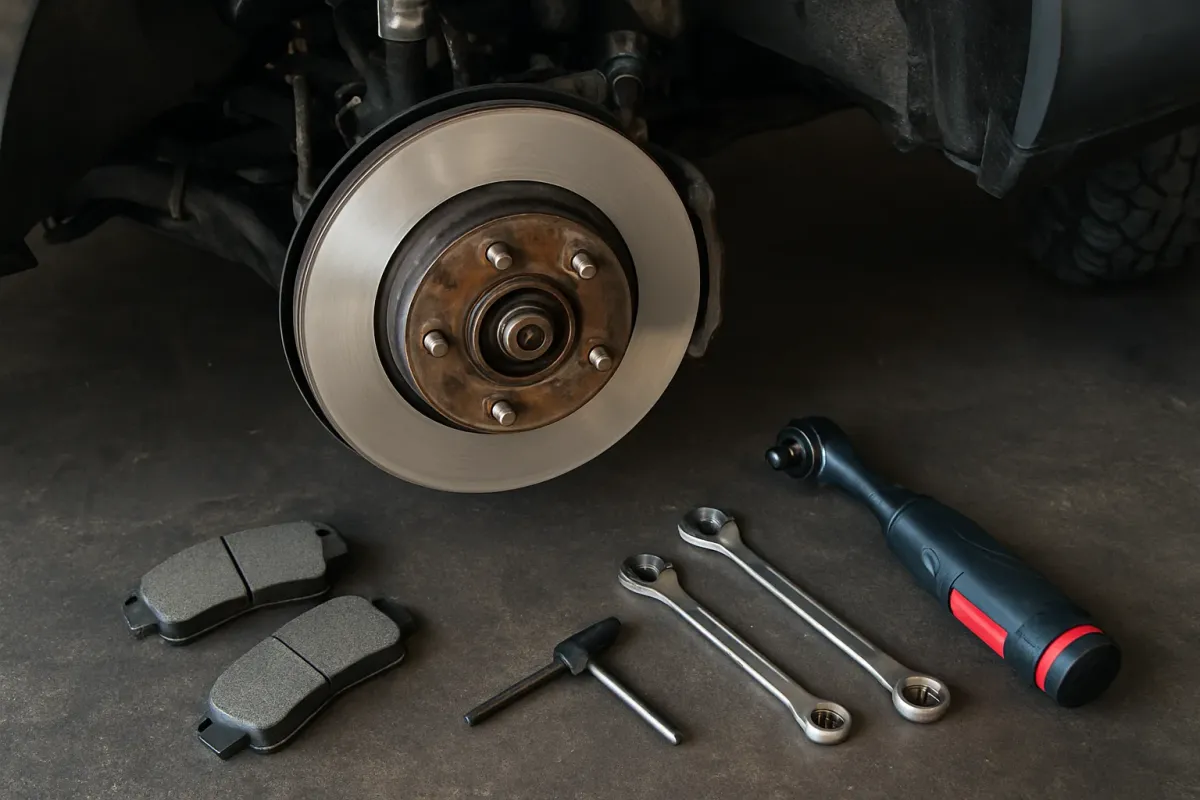
The braking system of your Jeep Grand Cherokee is safety-relevant and should be checked and serviced regularly by a professional. Depending on the model year and equipment variant, the design and dimensions of brake discs, brake pads and brake calipers can differ. Therefore it is important to always use the information in the vehicle documents and the exact vehicle selection in the shop when choosing replacement parts.
Typically the Jeep Grand Cherokee has disc brakes at the front and at the rear either disc brakes or disc/drum combinations with an integrated parking brake, depending on the model. You can identify the exact configuration on the vehicle or via the vehicle identification number (VIN).
Selecting suitable brake parts for the Jeep Grand Cherokee
To find suitable parts, you should have the following data ready:
- Vehicle identification number (VIN)
- Power rating and engine variant according to the registration document
- First registration or production period
- Information on special models (e.g. SRT)
In the shop category Bremsen & Bremsenteile you can select your Jeep Grand Cherokee and display suitable components. Pay attention to notes on model years and any system designations (e.g. TEVES).
Brake pads for the Jeep Grand Cherokee
Brake pads often come in different versions for different model years and calipers. Examples of specific applications are:
- Brake pads / brake linings front for Jeep Grand Cherokee 1999 - 2002 (TEVES)
- Brake pads / brake linings rear for Jeep Grand Cherokee 1999 - 2004
- Brake pads / brake linings front for Jeep Grand Cherokee Commander 2005 - 2010
- Brake pads / brake linings rear for Jeep Grand Cherokee Commander 2005 - 2010
- Brake pads / brake linings front for Dodge Durango Jeep Grand Cherokee 2012 -
- Brake pads / brake linings rear for Jeep Grand Cherokee Dodge Durango 2011 -
- Ceramic brake pads rear for Jeep Grand Cherokee 2006 - 2017 Brembo brakes
- Brake pads / brake linings front for Jeep Grand Cherokee 2006 - 2010 SRT
These examples show how strongly pads differ by model year, brake system and equipment. Always compare the shape and size of the old pads with the product images before you start installation.
Further pads can be found in the category Bremsbeläge.
Brake discs, calipers and other components
Different brake disc diameters and thicknesses are fitted to the Jeep Grand Cherokee, some with internally ventilated discs and some solid discs. You can find the exact dimensions in the workshop manual or the vehicle documents. In the category Bremsscheiben you will find suitable discs according to the vehicle selection.
Brake calipers and brackets are particularly relevant if guide pins are worn, threads are damaged or the pistons seize. You can find replacement parts for these under Bremssättel & -halterungen. Other small parts, hoses and accessories are in the section Sonstige.
For a complete service on the front or rear axle, brake overhaul kits are also interesting, as they usually contain matched discs, pads and fitting hardware.
Recognizing wear: When do brakes on the Grand Cherokee need to be renewed?
The exact wear limits (minimum thickness of discs and pads) depend on the installed system and are listed in the workshop manual or are often stamped directly on the brake disc. In general, you should be alert when:
- a metallic grinding noise occurs when braking
- noticeably increased braking distances are felt
- the steering wheel or body vibrates when braking
- your Jeep Grand Cherokee pulls to one side when braking
- the brake pad wear indicator (if present) lights up
At every inspection or at least every 10,000 km it's worth looking through the wheels at the pads and discs. Even better: remove the wheel and measure the thickness with a vernier caliper. Deep scoring, rust ridges or grooves on the disc indicate an impending replacement.
Tools and preparation for the brake change
Before you work on the braking system of your Jeep Grand Cherokee, make sure you observe the following points:
- Secure the vehicle on jack stands and support it safely
- Apply the parking brake only when working on the front axle (release it when working on the rear axle)
- Prepare suitable tools (socket set, box wrenches, torque wrench, brake piston retractor depending on the system)
- Protective equipment: gloves, safety glasses
- Original workshop manual or technical data source with torque specifications
Torque settings for caliper, caliper carrier and wheel bolts are model-dependent. Please use only the specifications from the Jeep documentation or the manufacturer-specific workshop manual here and tighten all bolts with an appropriate torque wrench.
Step-by-step: changing brake pads on the Jeep Grand Cherokee
The exact procedure depends on the brake system (e.g. sliding caliper vs. fixed caliper). The following procedure describes the typical approach for a sliding caliper, as used on many Grand Cherokee variants. Check your system and compare the steps with the workshop manual.
1. Prepare the vehicle
- Slightly loosen the lug nuts before the vehicle is lifted.
- Raise the Jeep Grand Cherokee with a jack and place it on jack stands.
- Remove the wheel completely.
2. Dismantle the caliper
- Turn the steering to gain better access to the caliper.
- Clean the back of the caliper so that the screw heads are easily accessible.
- Loosen and remove the guide pins or caliper bolts.
- Carefully remove the caliper and hang it on the strut with wire or a hook so the brake hose is not strained.
3. Remove and inspect the old pads
- Remove the brake pads from the caliper carrier.
- Check pad thickness and look for uneven wear (an indication of stiff guide pins or sticking pistons).
- Check the brake disc for grooves, cracks or heavy rust ridges.
If the disc is below the minimum thickness or shows severe damage, it should be replaced. Please look up dimensions and minimum thicknesses in the vehicle documents.
4. Clean the caliper and guides
- Remove the caliper carrier if the guide surfaces are heavily corroded or if new clips are to be fitted.
- Remove rust from the sliding surfaces in the caliper carrier with a wire brush or file (do not grind into the base material).
- Pull out the guide pins and check for free movement and damage.
- Lubricate the guide pins sparingly with a suitable high-temperature brake grease (do not use copper grease on systems with ABS sensors in close proximity; follow manufacturer instructions).
5. Retract the pistons
- Check the brake fluid level in the reservoir; if necessary remove some fluid so nothing overflows when pushing back the pistons.
- Slowly retract the pistons with a suitable retraction tool. On systems with an integrated parking brake the pistons may need to be rotated and pressed — here follow the workshop manual.
6. Install new brake pads
- Fit new retaining clips or guide plates if included in the kit.
- Apply a thin layer of suitable anti-squeal paste to the pad backs and contact points in the caliper carrier (do not apply to the friction surface).
- Insert the new brake pads into the caliper carrier and ensure correct seating.
- Place the caliper back over the new pads and install the guide pins.
- Tighten the guide pins to the manufacturer specification with a torque wrench.
7. Final work
- Mount the wheel and tighten the lug nuts hand-tight in a criss-cross pattern.
- Lower the vehicle and tighten the lug nuts to the specified torque (value from the vehicle documentation).
- Operate the brake pedal several times while stationary until a firm pressure point is present so the pistons seat against the new pads.
- Check the brake fluid level again.
Specials when changing brake discs on the Jeep Grand Cherokee
When replacing the brake discs, proceed basically as with pad replacement, supplemented by the following steps:
- Remove the caliper carrier so the disc is free.
- Remove any retaining screw(s) of the brake disc.
- Thoroughly remove rust from the hub face and clean it so the new disc sits without stress.
- Remove any corrosion protection oil from the new disc before installation (use brake cleaner).
- Fit the caliper carrier with new bolts or with threadlocker as applicable – always use the torque specified in the Jeep documentation.
On Grand Cherokee variants with an integrated drum-type parking brake in the rear brake disc, springs, adjusters and brake shoes must also be checked and correctly adjusted. It is worth consulting the workshop manual here, as the adjustment procedure and permissible clearances are model-dependent.
Bedding-in new brakes on the Jeep Grand Cherokee
After changing pads and/or discs, bedding-in is important so that pads and discs run in cleanly. The following has generally proven effective:
- Avoid hard full-force stops on the first 200–300 km, except in an emergency.
- Perform repeated moderate stops from medium speed to almost a standstill, letting the brakes cool between stops.
- Avoid prolonged braking with the pedal slightly depressed on downhill stretches (use engine braking instead).
Manufacturer-specific instructions for bedding-in (e.g. for ceramic pads) are in the documents supplied with the pads.
Safety instructions and common pitfalls
- Replace per axle: Always service both sides of an axle at the same time, otherwise differing braking forces may occur.
- Brake fluid: Contaminated or old brake fluid can lead to a soft pedal and fading. Observe replacement intervals according to the manufacturer.
- Check seals and boots: Replace porous dust boots on pistons or guide pins in time to avoid consequential damage.
- Protect ABS sensors: When working on the hub and caliper, take care not to damage ABS sensors and cables.
- Test drive: After any work on the braking system, test cautiously (low speed, quiet road) before returning to normal traffic.
Frequently Asked Questions
How do I find the right brake pads for my Jeep Grand Cherokee?
Use the vehicle identification number and the information in the vehicle documents and select your exact model and model year in the category Bremsbeläge. Also compare the shape and dimensions with the old pads.
Do I always have to replace the brake discs when changing pads?
No, but the discs must be within the permissible minimum thickness and must not show deep grooves, cracks or heavy rust. The minimum thickness is model-dependent and is listed in the workshop manual or on the disc. If there is damage or the minimum is undershot, the discs should be replaced.
What torque settings apply for caliper and wheel bolts on the Grand Cherokee?
The torque settings vary depending on model year, brake system and axle. Do not rely on general values here; always use the official specifications from the Jeep workshop documents or from a verified technical database for your specific Jeep Grand Cherokee.