Brakes & Brake Parts for the Chevrolet Tahoe: Selection and Installation
Chevrolet Tahoe brakes: what to check before buying. Compare vehicle fitment, kit contents and relevant products.
Overview: Brake system on the Chevrolet Tahoe
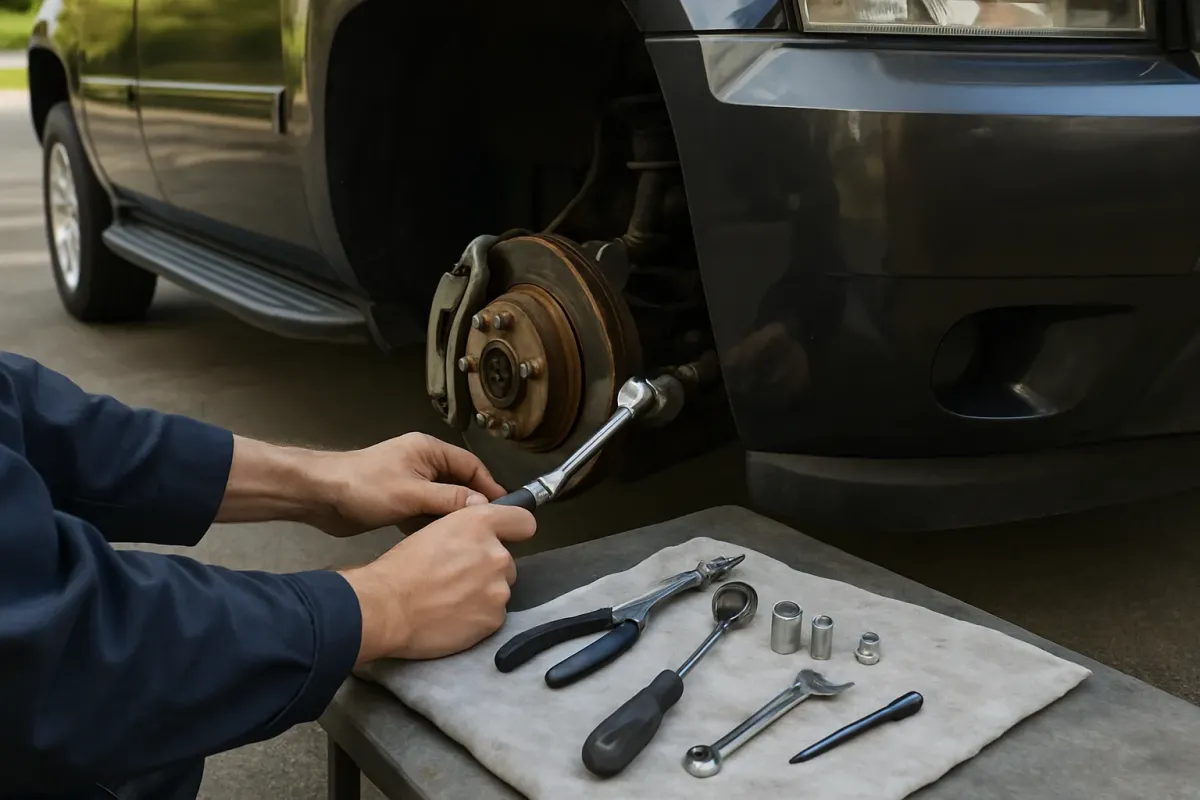
The brake system on the Chevrolet Tahoe is particularly heavily loaded due to vehicle weight and use as a towing vehicle. To maintain driving safety and braking performance, selecting the correct brake parts and professional installation are crucial.
Typically there is a disc brake with a floating/sliding caliper at the front; at the rear, depending on specification, there may be a disc brake with an integrated drum-type parking brake or other variants. Which specification your Tahoe has exactly can be found in the vehicle papers and by inspecting the original brake system on the vehicle.
Finding the right brake parts for the Chevrolet Tahoe
Because the Chevrolet Tahoe has different brake configurations depending on the production period, drivetrain and approval, you must always choose parts specifically. The following information will help you:
- Vehicle Identification Number (VIN) and data from the registration document
- Axle (front/rear) and drivetrain variant (e.g., AWD, if applicable)
- Brake specification (rotor diameter, pad shape, number of pistons)
- Whether a special version is fitted (e.g., trailer package or Police/HD brakes)
In the shop you can filter via the category Brakes & Brake Parts and select your Chevrolet Tahoe there. Always compare the technical data in the shop with your vehicle data and, if possible, with the removed parts.
Typical components on the Tahoe
- Brake rotors front and rear
- Brake pads for disc brakes
- Brake shoes for the parking brake (drum inside the rotor hat)
- Brake calipers and brackets
- Small parts kits such as guide pins, clips, springs
As examples there are specific offers for the Tahoe, such as front brake rotors with brake pads or parking brake shoes with spring kit for the parking brake. However, always check whether the stated vehicle application exactly matches your Tahoe.
Brake rotors for the Chevrolet Tahoe: selection and notes
Rotors must match diameter, thickness, bolt circle (PCD), center bore and height exactly. Even small deviations can cause the rotor to be non-mountable or the brake to not work correctly.
Important criteria for rotors
- Dimensions according to the vehicle documentation and, if available, markings on the old rotor
- Vented or solid: front rotors on the Tahoe are usually internally vented
- Standard, drilled, slotted: depending on use
- With or without integrated drum for the parking brake (rear)
An example are rear drilled rotors with matching pads for certain Tahoe variants, as in the article 2x drilled rotors with brake pads rear for Chevrolet Tahoe. Such kits simplify selection, provided your vehicle is within the stated application range.
Do not rely on estimates for dimensions. If the dimensions are not listed in the shop, compare part numbers with your documents or contact the parts dealer with the VIN.
Brake pads for the Chevrolet Tahoe: friction material and shape
Brake pads must match the shape, thickness and the mounting features (tabs, ears, guides) of the caliper bracket on your Tahoe.
Differences in brake pads
- Axle: always consider front and rear separately
- Specification: AWD/4x4 can have different pads
- Special versions: sometimes different friction material compounds
- With/without wear sensor: depending on build
In the shop you will find specific sets for different production periods, e.g. front brake pads for Chevrolet Tahoe 2000–2006 or suitable rear pads for certain all-wheel-drive variants of the Tahoe.
Always prioritize brake pads for which compatibility is explicitly checked against your vehicle, and compare the contour of the pads with the product images.
Parking brake shoes on the Tahoe
Many Tahoe variants have rear disc brakes with a small drum for the parking brake inside the rotor hat. Parking brake shoes work there with a spring kit and an adjuster mechanism.
When replacing the rear rotors you should always inspect these brake shoes. Severely worn or glazed shoes will reduce holding power despite apparently functioning disc brakes.
For some model ranges there are complete kits with shoes and springs, such as parking brake shoes including spring kit. During installation the exact positioning of springs and levers is critical; follow the workshop documentation or take photos before disassembly.
Brake calipers and brackets
The caliper on your Tahoe is usually a floating/sliding caliper that slides on guide pins in the bracket. Seized guide pins or sticking pistons lead to uneven pad wear and overheating.
In the category Brake Calipers & Brackets you will find suitable components. Pay attention to:
- Matching caliper type and number of pistons
- Correct connection for the brake line
- Proper bracket for the used rotor diameter
With heavily corroded brackets or worn guide pins, replacement is often preferable to repair with individual parts.
Preparation before changing the brakes
Before you work on the brakes of the Chevrolet Tahoe, pay attention to the following points:
- Securely jack up the vehicle and support it on jack stands
- Only loosen lug nuts while the vehicle is stationary
- Check brake fluid level (when retracting pistons the level can rise)
- Use only clean tools, avoid oily fingers on friction surfaces
- Wear appropriate protective clothing and dust protection (do not inhale brake dust)
Torque specifications for caliper, bracket and lug nuts should always be taken from the workshop documentation or the official documents for your Chevrolet Tahoe. Values from the internet should not be used unchecked.
Installation: front rotors and brake pads
The exact procedure can vary depending on the front brake design. In general, the replacement on the Chevrolet Tahoe usually follows these steps:
- Loosen and remove the wheel.
- Unbolt the caliper and hang it on the strut with wire so the brake line is not stressed.
- Remove the brake pads from the bracket, noting clips and guides.
- Remove the caliper bracket if necessary to take off the rotor.
- Remove the old rotor. If stuck, carefully remove corrosion and, if necessary, use penetrating oil. Under no circumstances strike the hub or wheel bearing assembly with force.
- Thoroughly clean the hub surface (wire brush, light rust removal if needed) so the new rotor seats flat.
- Fit the new rotor, optionally temporarily secure it with one lug nut.
- Reinstall the bracket and tighten to the manufacturer's specified torque.
- Clean sliding/contact surfaces in the bracket, fit new clips, install brake pads (observe any lead-in chamfers and correct orientation).
- Retract caliper pistons slowly with a suitable tool, watching the rising brake fluid level.
- Reinstall the caliper and tighten to specified torque.
- Install the wheel, lower the vehicle and torque the lug nuts in a star pattern to the correct torque.
All torque values and any special assembly steps must be looked up in the repair manual or the original documentation for your Chevrolet Tahoe.
Installation: rear rotors, pads and parking brake
The rear service on the Tahoe is somewhat more involved because the parking brake sits inside the rotor hat. Typical procedure (simplified):
- Remove the wheel, as for the front.
- Remove the caliper and bracket as on the front axle.
- Release or slacken the parking brake cable if necessary.
- Remove the rotor. If it is stuck, usually a burr from the parking brake is to blame. Retract the adjuster via the service opening if present.
- Inspect parking brake shoes and springs. Replace completely if heavily worn.
- Install the new shoe set including springs, ensuring correct positioning of adjuster, springs and levers (photos of the original setup help).
- Fit the new rotor and adjust the parking brake via the adjuster according to the manufacturer's instructions (aim for slight drag, then back off slightly).
- Install new brake pads, retract caliper pistons, and mount the caliper.
Proper adjustment of the parking brake requires care. The exact adjustment procedure and torque values for brackets, cables and calipers are found in the Chevrolet Tahoe workshop manual.
After the brake change: checks and bedding-in
After working on the brake system you should observe the following:
- Pump the brake pedal several times before driving until a firm pedal is achieved.
- Check the brake fluid level and top up as required with the specified fluid.
- First test drive at low speed to evaluate braking behavior.
- Bedding-in the new pads and rotors according to the manufacturer's recommendation (usually several light to moderate stops from moderate speed, no full-force stops, until a uniform friction layer has formed).
- After a short running period (e.g., after a few hundred kilometres) visually check for uneven wear, fading or vibrations.
Avoid typical mistakes during brake service on the Tahoe
- Contaminated friction surfaces: avoid contact with grease/oil, clean with brake cleaner if necessary.
- Pistons retracted incorrectly: do not let pistons bind or tilt, do not damage dust boots/seals.
- Guide pins not lubricated: use only suitable high-temperature brake grease.
- Reusing bolts that are specified as one-time use: check the manufacturer's instructions.
- Missing torque values: always use a torque wrench for lug nuts and brake fasteners, values according to documentation.
Overview: Which parts can you find where in the shop?
| Part | Note | Category in the shop |
|---|---|---|
| Brake rotors | Front/rear, check dimensions and specification | Brake Rotors |
| Brake pads | Consider axle and specification (AWD etc.) | Brake Pads |
| Parking brake shoes | For discs with integrated drum hat | Brake Shoes |
| Brake calipers and brackets | Check matching caliper type and connection | Brake Calipers & Brackets |
| Complete kits | Often rotors plus pads, axle-specific | Brake Complete Kits |
Frequently Asked Questions
How do I identify which brake parts fit my Chevrolet Tahoe?
Use the Vehicle Identification Number and the data from the registration document and match them with the vehicle selection in the shop. Additionally, you should visually compare the shape of the old pads and rotor dimensions with the product images. If in doubt, consult the repair manual or contact the parts dealer with the VIN.
Do I always have to replace rotors and pads at the same time on the Tahoe?
It is recommended to renew rotors and pads together per axle, especially on the heavy Chevrolet Tahoe. Replacing only the pads while the rotors are already severely worn or below minimum thickness can significantly reduce braking performance and service life. Whether your rotors are still within the wear limit is specified in the vehicle documentation.
What torque values apply for caliper and lug nuts on the Tahoe?
The torque values can vary depending on the brake specification and build of your Chevrolet Tahoe. Never use estimated values. The correct torque specifications for caliper, bracket and wheel fasteners can only be found in the official workshop documentation or the technical data sheet for the respective model.