Body panels, attachable parts & accessories for Dodge Ram 1500
RAM 1500 body parts: what to check before buying. Compare vehicle fitment, kit contents and relevant products.
Basics: body panels and attachable parts on the Dodge Ram 1500
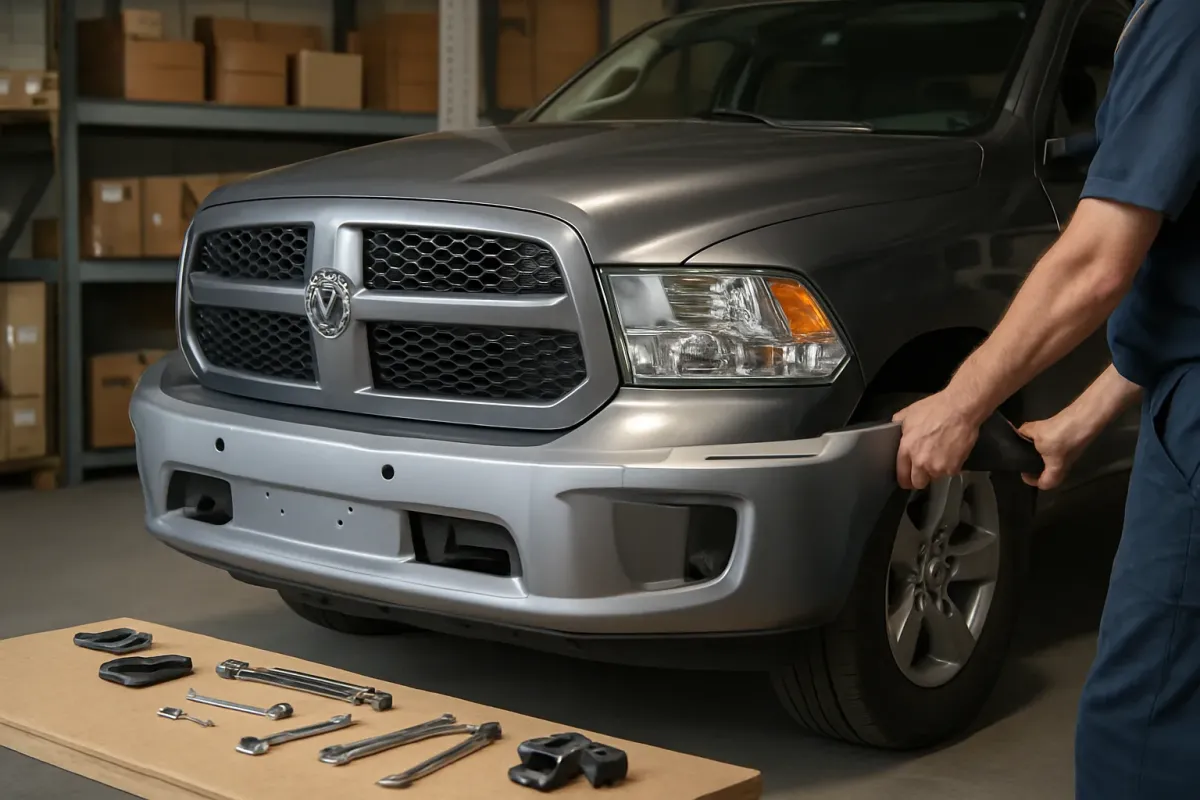
The Dodge Ram 1500 is heavy and large in dimension; accordingly, body panels and attachable parts are built robustly. Anyone who wants to install bumpers, hood, fenders, running boards or accessories themselves should be familiar with basic chassis and bodywork tasks and have stable lifting equipment (a hoist or a floor jack with jack stands).
Parts offered on the market can be roughly divided into three groups:
- Near-original replacement parts (e.g. bumpers, hoods, fenders as repair parts)
- Cosmetic tuning (e.g. sport hoods, radiator grilles, bull bars, fender flares)
- Functional add-ons (e.g. running boards, nerf bars, roll bars)
Before ordering, you should unambiguously identify your Dodge Ram 1500 (model generation, year of manufacture according to the vehicle documents, drive and equipment variant) and compare these data with the vehicle selection in the shop. Many parts only fit certain model generations or equipment variants.
Checking fitment: what to watch before ordering
Body parts for the Dodge Ram 1500 are often vehicle-specific. Differences arise, among other things, from:
- Model generation (e.g. older DS models vs. newer DT models)
- Body style (Single Cab, Extended Cab, Crew Cab – relevant for running board length)
- Special editions like Sport, Rebel, TRX look (different grilles, hoods, bumper shapes)
- Existing sensors (parking sensors, front camera, radar sensors in the grille)
- Trailer hitch, step inserts in the bumper, exhaust position
When in doubt, always cross-check the notes in the product description and the indicated years/model codes with the vehicle documents. For uncertainties about torque specs, fluid capacities (e.g. washer reservoir when converting the front end) or special tools, consult the workshop literature or the official Dodge Ram 1500 repair manual.
An overview of suitable categories is offered, for example, in the section Karosserie-, Anbauteile & Zubehör.
Front area: bumpers, radiator grilles and hoods
Front bumpers and complete kits
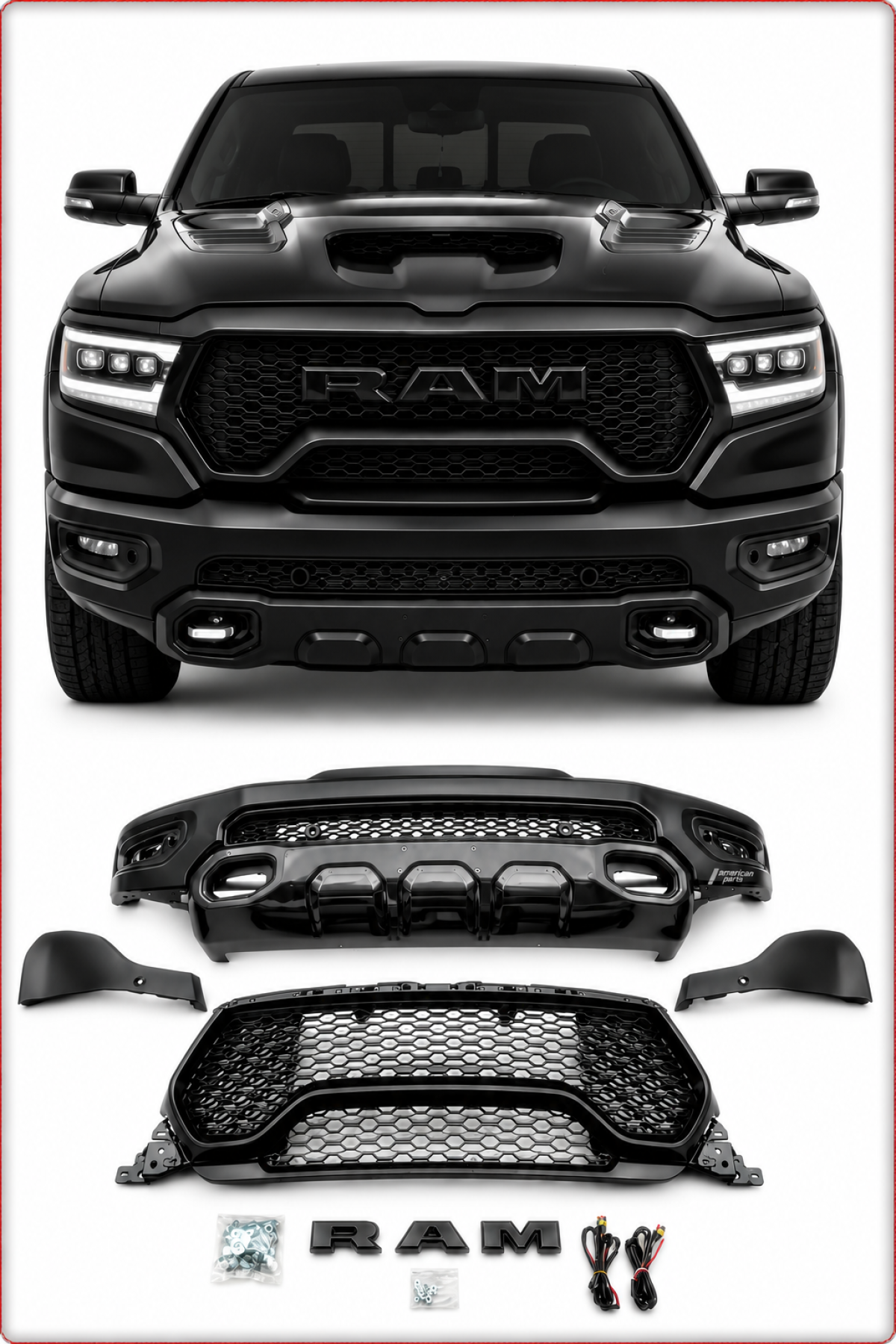
Front bumpers often carry additional components such as the grille, LED inserts, skid plates and mounts for parking sensors. Complete kits like a complete front bumper + grille + LED in TRX style for certain Ram 1500 DT models simplify the conversion because mounts and transitions are matched to each other.
Typical work steps for front bumpers (model-dependent, order may vary):
- Securely jack up the front of the vehicle, remove underbody covers.
- Disconnect electrical connectors (PDC parking sensors, fog lights, LED strips, camera, if present).
- Release fasteners in the wheel arch and beneath the bumper (screws/clips, model-dependent).
- Remove the bumper with a helper to avoid damage to fender edges.
- Transfer attachable components (sensors, brackets, air guides) onto the new part.
- Fit the new bumper, check panel gaps, then tighten permanently.
Tightening torques for fasteners are model-specific and must be looked up in the Dodge Ram 1500 workshop documentation.
Radiator grilles and air intakes
Front and radiator grilles affect appearance and airflow. An example is a Rebel-style grille with LED for certain DT models. When replacing them, the following points are important:
- Compatibility with sensors/camera (if the original grille houses them)
- Mounting points to the radiator support and to the hood
- Clearance for the intercooler and engine radiator
- Electrical protection for additional LEDs (wire gauge, fusing according to manufacturer specifications)
Some grilles are supplied together with new front bumpers, others only replace the center section. Follow the manufacturer's specific installation instructions.
Hoods: appearance and weight
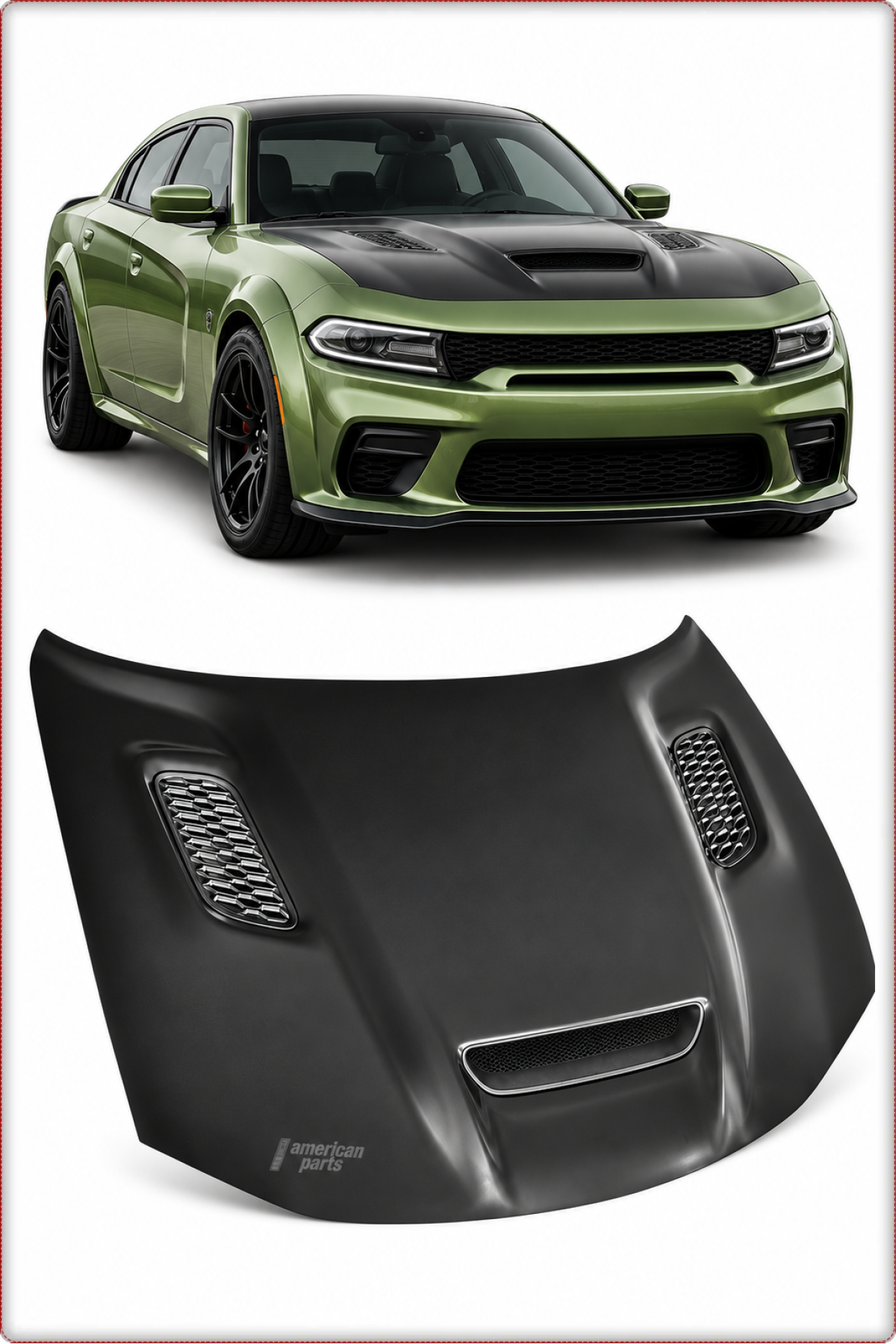
Sport and off‑road hoods change the look and often the weight. Aluminum hoods such as the aluminum hood for Dodge Ram 1500 Sport Rebel (selected years) or the aluminum hood for newer Dodge Ram 1500 model years combine looks with weight savings.
When changing the hood, note:
- Exact model identification (year, model series, possibly special equipment)
- Reuse of hinges, hood latch and gas struts where intended
- Precise adjustment of the hood to the latch striker and fender gap measurements
- Check clearance around the air filter, intake tract and ancillary components
Supporting and removing the hood should be done by at least two people. Torque specs for hinge and latch striker fasteners are to be taken from the service manual.
Side attachments: running boards, rocker bars and fenders
Running boards and nerf bars
Running boards and nerf bars make entry into the Dodge Ram 1500 easier and protect the rocker areas. An example are running boards/nerf bars in TRX style for certain DS models.
Important points before installation:
- Length according to cabin variant (e.g. Crew Cab vs. shorter cab forms)
- Mounting points to the frame or to original threaded inserts in the rocker area
- Load capacity specifications and manufacturer usage instructions
Installation procedure (general, model-dependent):
- Secure the vehicle laterally, clean the underbody.
- Remove any blanking plugs in the mounting points (if present).
- Loosely fasten brackets at the intended points.
- Place the running board/nerf bar, check alignment (parallel to the body edge).
- Tighten all fasteners to the manufacturer's specification.
For exact torque values of the screws used, follow the running board manufacturer's installation instructions and, if applicable, the vehicle documentation.
Fenders, side panels and fender flares
Fenders and side panels on the Dodge Ram 1500 are important for repairs after accidents or corrosion. Under the category Fenders, side panels & fuel filler cap you will find appropriate body parts.
Additionally, fender flares are often fitted, for example a front/rear fender flare for selected Dodge Ram 1500 DS models. These parts are frequently required when wider wheels/tires are mounted and are intended to ensure coverage of the tread.
Key points:
- Compatibility with bumpers, side skirts and wheel/tire combinations
- Method of attachment (bolted to original points, additionally with clips or adhesive)
- Corrosion protection at drill holes (if additional holes must be made)
Legal requirements (e.g. registration/approval obligations, wheel coverage requirements) may vary by country. Manufacturer notes and the technical inspection authorities' requirements must be observed. If products include TÜV documentation, present these during approval.
Rear area: bumper, rear spoiler, roll bar
Rear bumpers
Rear bumpers on the Dodge Ram 1500 often integrate steps, parking sensors, license plate lighting and trailer hitch mounts. An example is a complete rear bumper for selected Ram 1500 DT models.
Typical work steps when changing:
- Jack up the rear of the vehicle, if necessary lower the spare wheel for better access.
- Disconnect electrical connectors for parking sensors and license plate lighting.
- Release fasteners at the frame (treat with rust penetrant if necessary).
- Remove the bumper with a helper to avoid scratches to the bed.
- Transfer sensors, wiring harnesses and mounts onto the new bumper.
- Align the new bumper, check the gap to the cargo bed, then fasten.
If the trailer hitch is integrated into the bumper construction, the manufacturer-specific torque values and installation instructions must be taken from the vehicle documentation.
Rear spoilers and wings
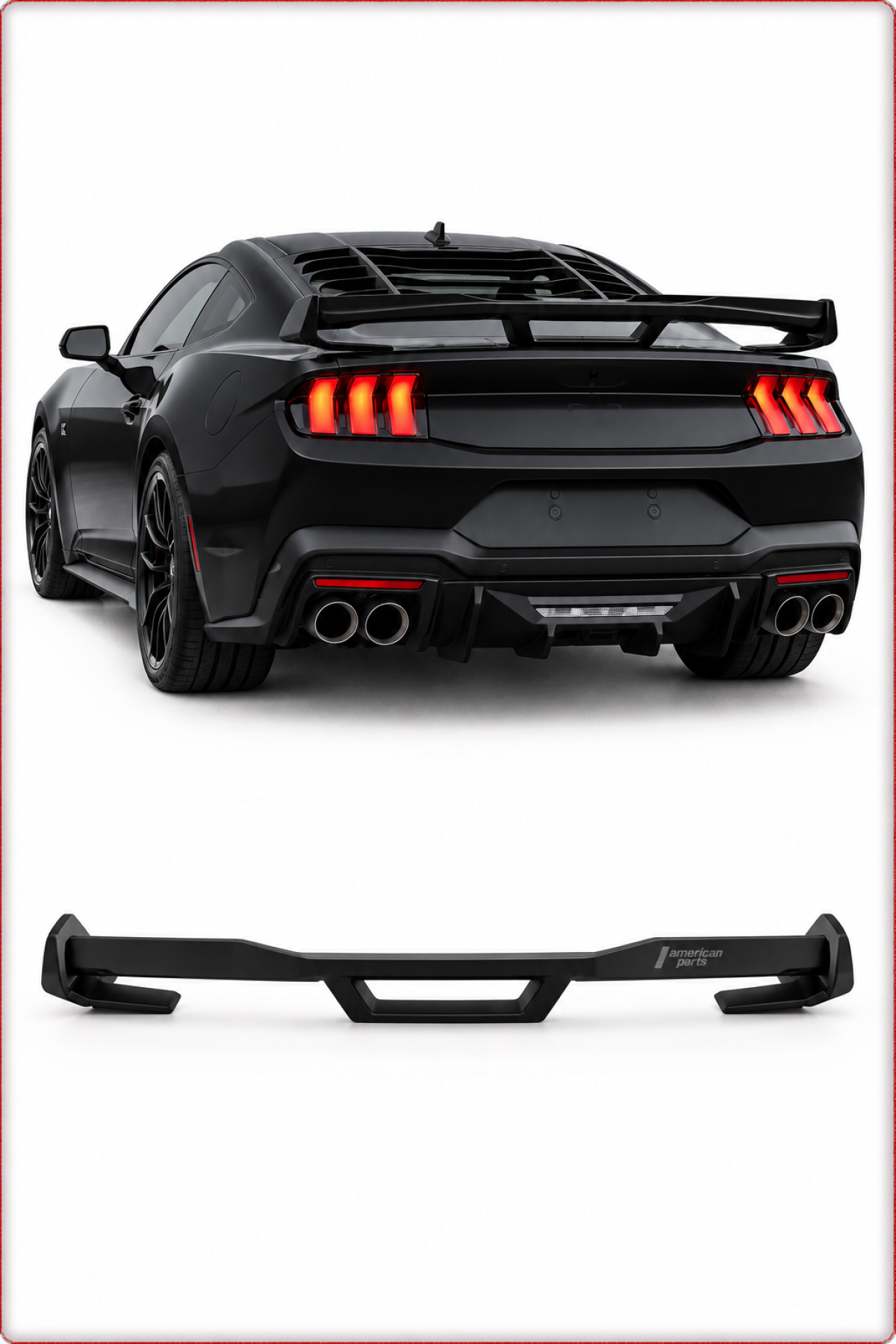
Rear spoilers on the tailgate or on the bed edge serve mainly aesthetics and sometimes aerodynamics. In the category rear spoilers & wings you can find vehicle-specific solutions for the Dodge Ram 1500.
Mounting points:
- Cleaning and degreasing of adhesive surfaces for bonded spoilers
- Precisely measured drill holes for bolted spoilers to avoid corrosion and stress
- Sealing of drill holes with appropriate sealants and paint
For drill holes in visible body panels, careful marking and measuring is mandatory. A helper for holding/positioning prevents scratches.
Bull bar / roll bar on the bed
A bull bar/roll bar gives the Dodge Ram 1500 an off‑road look and often provides mounting points for auxiliary lighting. An example is a rambar roll bar that is, among others, intended for the Dodge Ram.
Before installation clarify:
- Whether the rambar is compatible with an existing bed cover or roll cover
- How the attachment is made (to the bed edge or to internal reinforcements)
- Whether additional drilling is required and how these are protected against corrosion
- Cable routing and protection for additional lights according to legal requirements
For electrical add‑ons, observe the respective regulations for vehicle lighting. Manufacturer wiring diagrams and the vehicle's wiring schematics should be reviewed in advance.
Side skirts, rocker panel covers and transitions
In addition to running boards, there are side skirts and rocker panel covers that visually raise or widen the lower body area. Under side skirts you will find suitable components for the Dodge Ram 1500.
Important points during installation:
- Check alignment with the wheel arches and doors
- Clean contact areas to the original paint, if necessary apply protective tape
- Execute transitions to fender flares and bumpers neatly both visually and technically
To avoid long‑term corrosion, all cut edges, drill holes and exposed metal surfaces should be treated with corrosion protection.
Planning, tools and safety during installation
The following points are helpful for most jobs on body panels and attachable parts of the Dodge Ram 1500:
- Prepare documentation: service manual, exploded diagrams, torque tables.
- Tools: ratchet set (SAE and metric), Torx/internal spline bits, plastic trim wedges, rivet gun, torque wrench, wire strippers that protect insulation.
- Corrosion protection: zinc spray, cavity wax, stone chip protection, matching paints.
- Safety: stable jack stands, gloves, safety glasses, respiratory protection for grinding and drilling.
Especially when working near airbag sensors, radar and camera modules, as well as trailer electrics, exercise caution. If such components are moved or their surroundings altered, the manufacturer's specifications for the Dodge Ram 1500 must be strictly observed; in some cases calibration is required afterwards.
Common mistakes and how to avoid them
- Wrong model identification: Always compare the vehicle registration and the shop's information before ordering.
- Ignored sensors: Check bumpers/grilles in time for cutouts for PDC, camera, etc.
- Poor corrosion protection: Always seal new drill holes and cut edges.
- Ignored panel gaps: After initial tightening check and correct panel gaps all around.
- Guessed torque values: Never guess torque specs; look them up in the Dodge Ram 1500 repair manual.
Frequently asked questions
How do I find out if a body part fits my Dodge Ram 1500?
Decisive are the model generation, year of manufacture according to the documents and body style. Match these data with the vehicle selection in the shop and the notes in the article. In case of uncertainty, consult the repair manual or perform a precise VIN check.
Can I change bumpers and the hood on the Dodge Ram 1500 by myself?
Technically it is possible; practically, due to weight and size you should work with at least two people. All safety-relevant points (sensors, latching, trailer hitch) must be installed and checked according to the manufacturer's documentation.
Do I need approval/registration for spoilers, fender flares and a rambar?
That depends on the part, the country and the combination with wheel/tire size. If certificates or TÜV documentation are provided, use them and discuss with the responsible inspection authority. Always check the legal requirements before conversion.
Read next: RAM 1500: choosing a TRX style bumper for the right trim